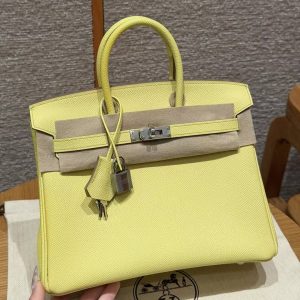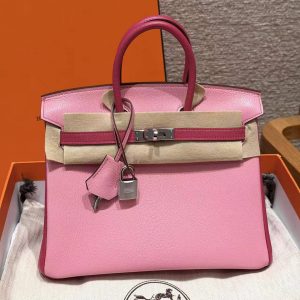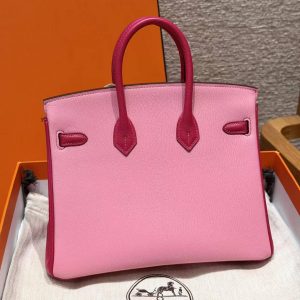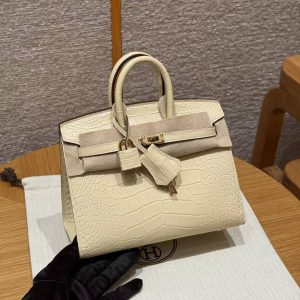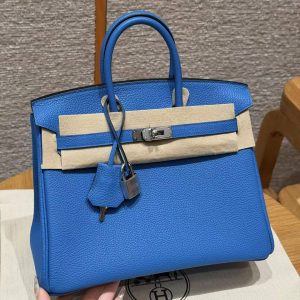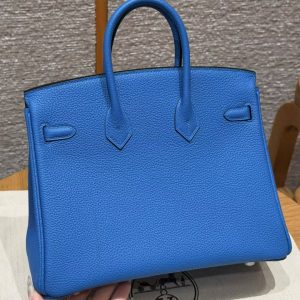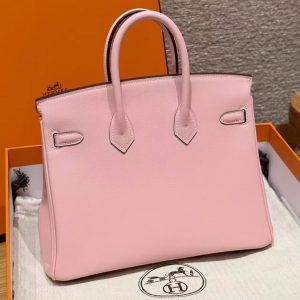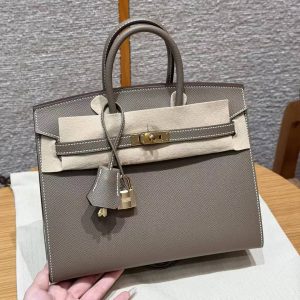
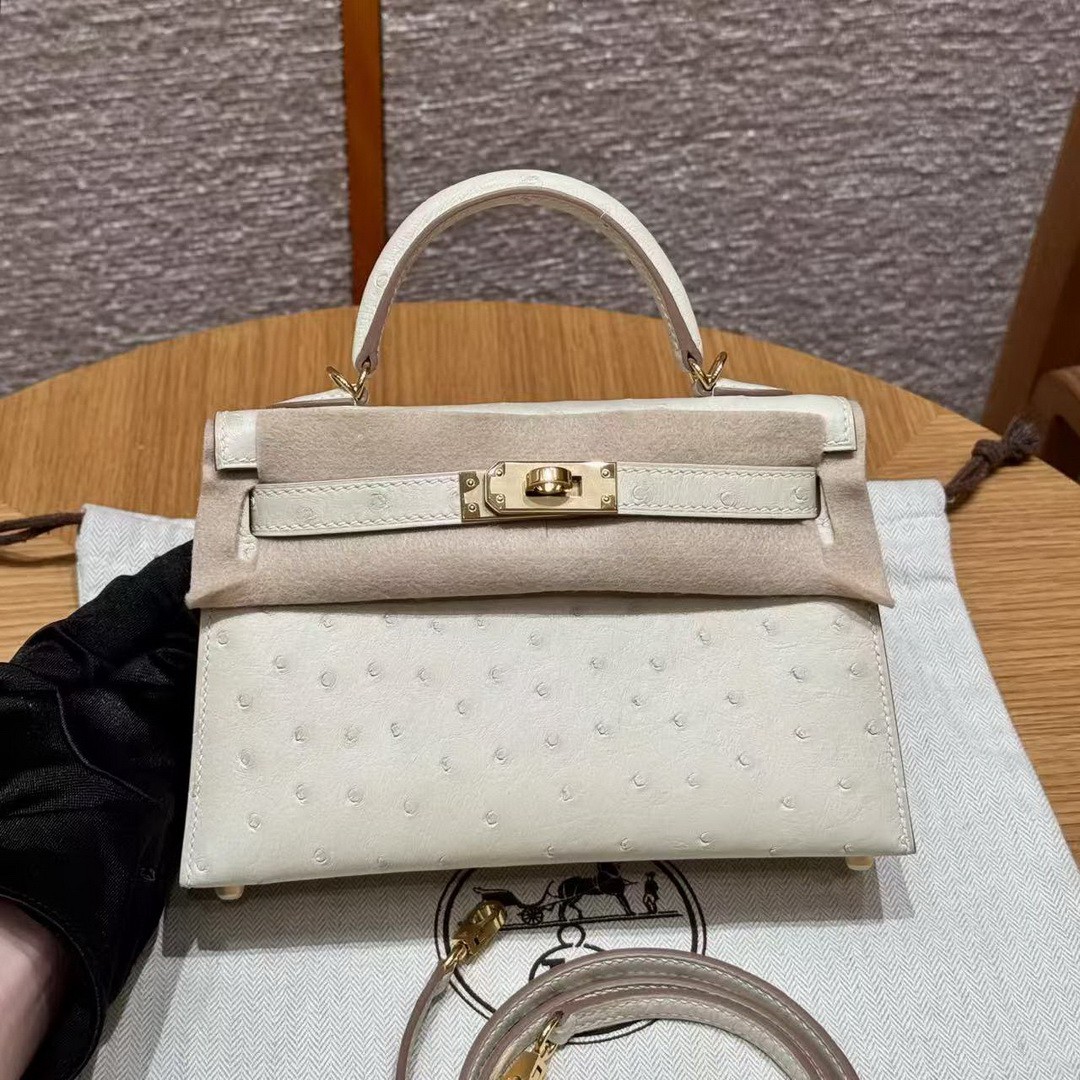
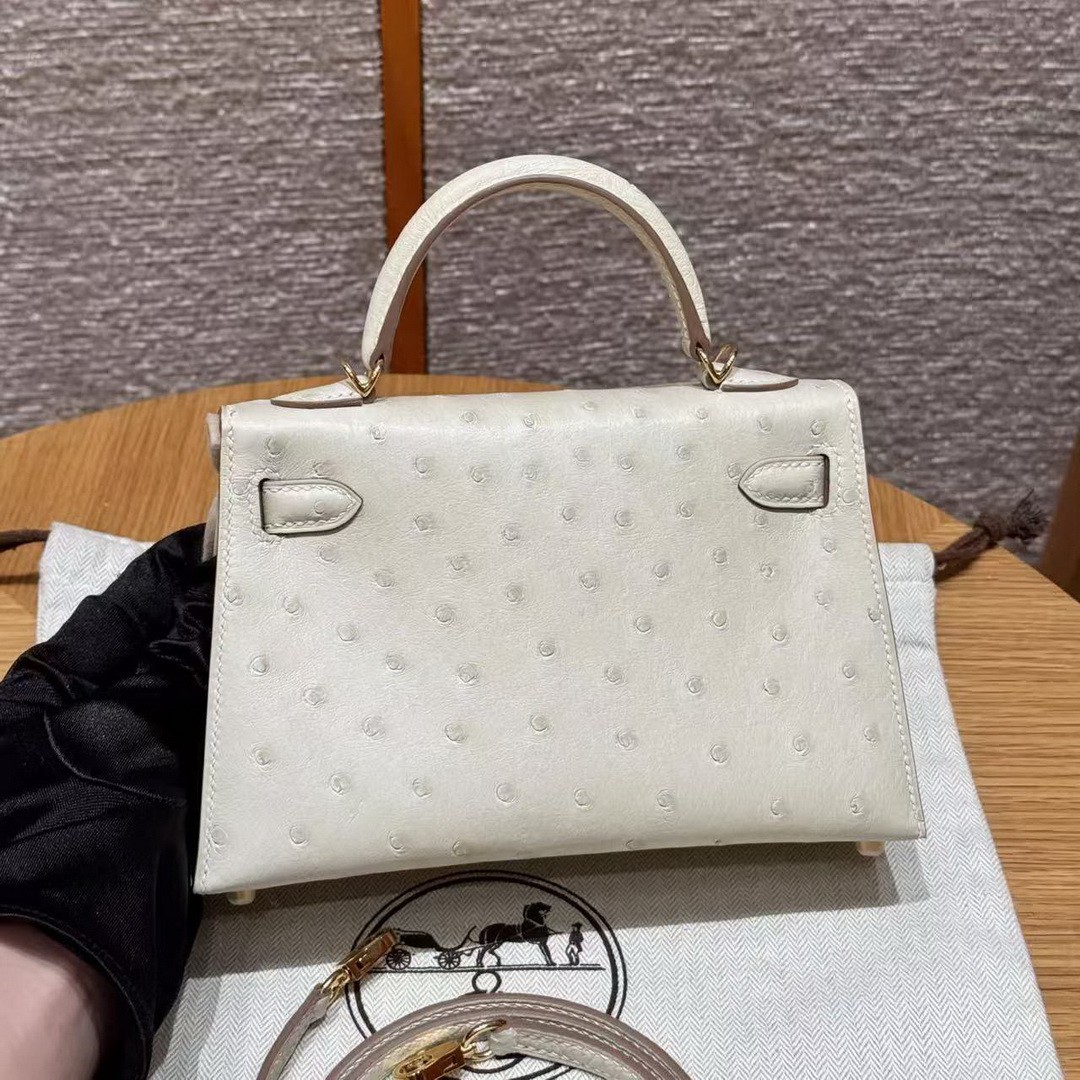



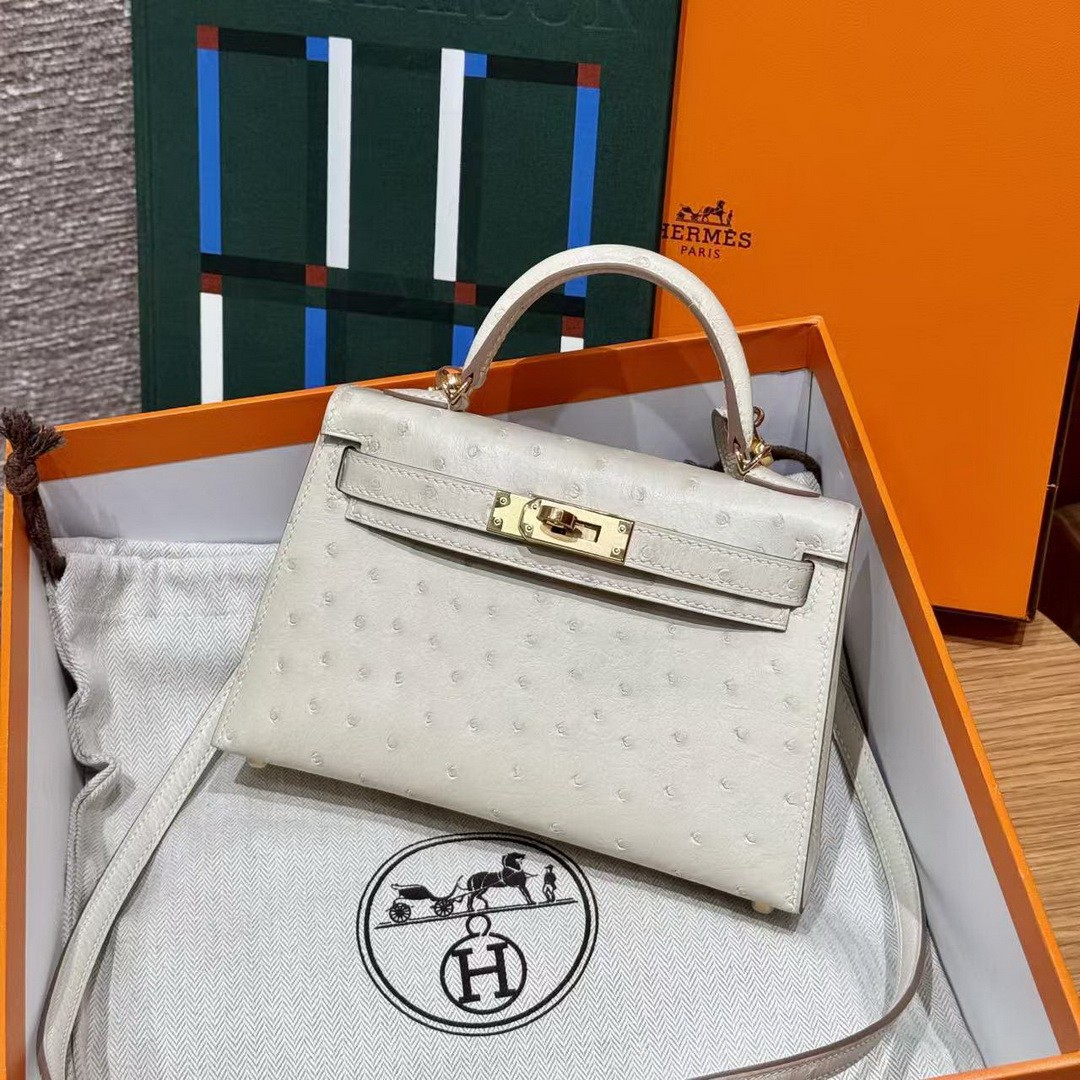
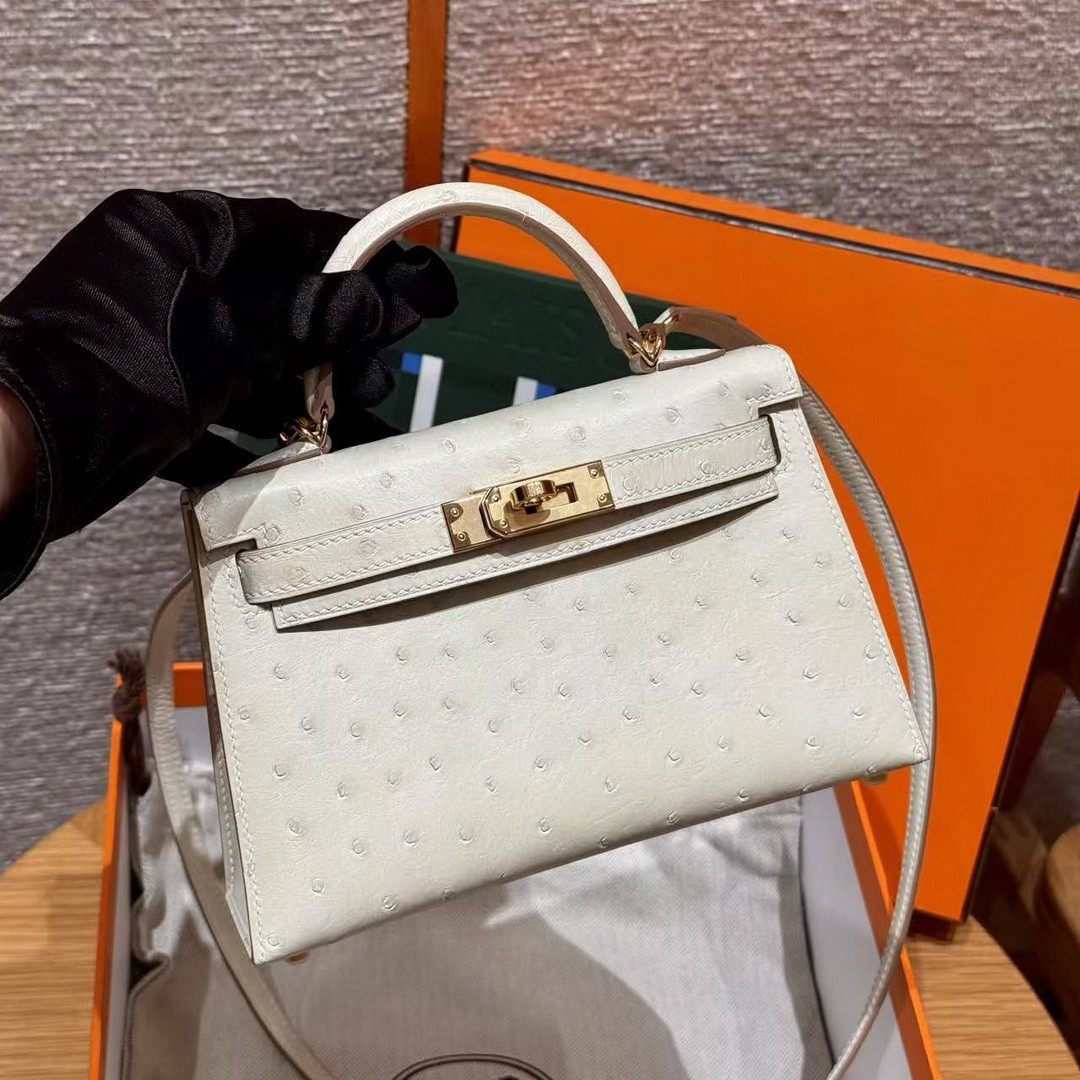
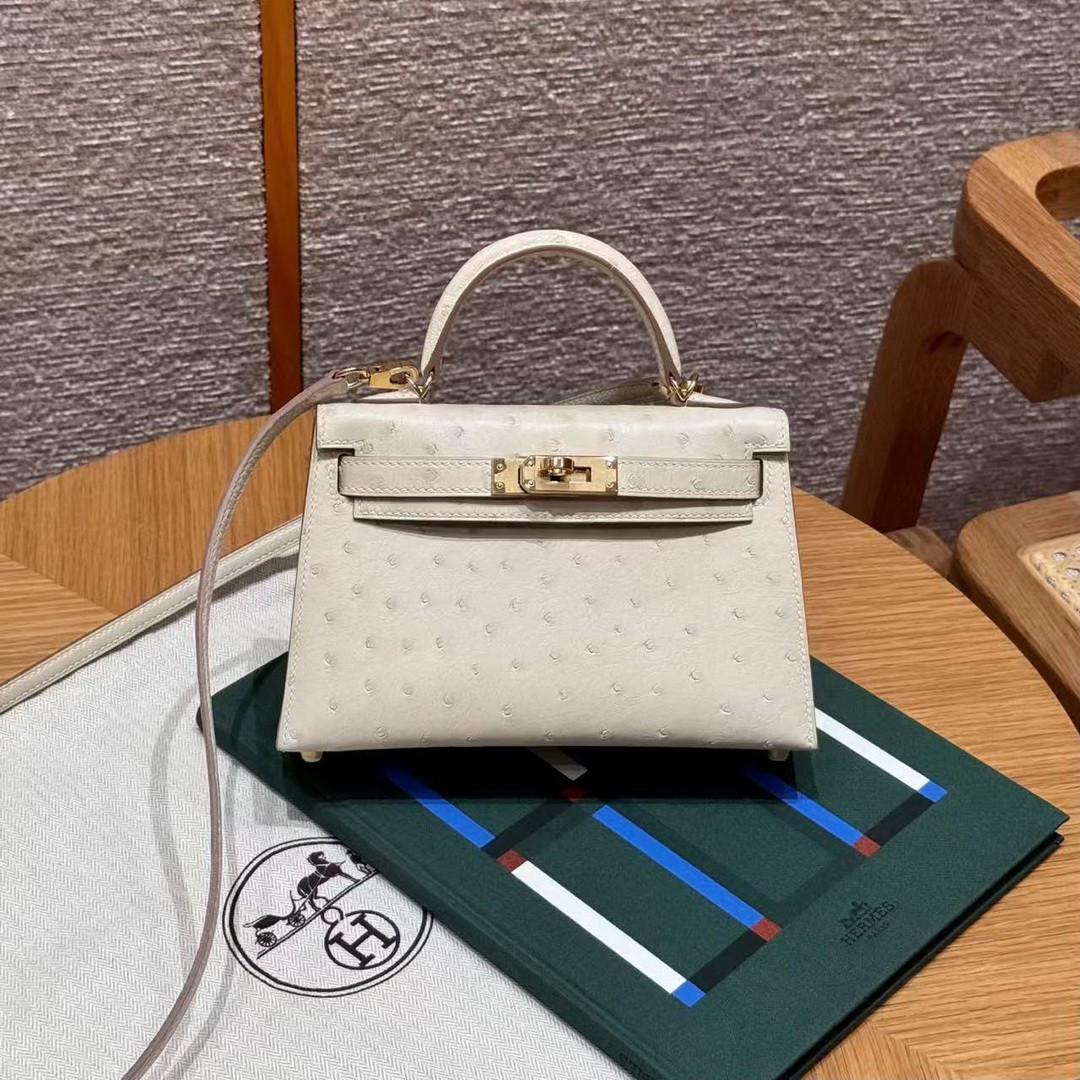
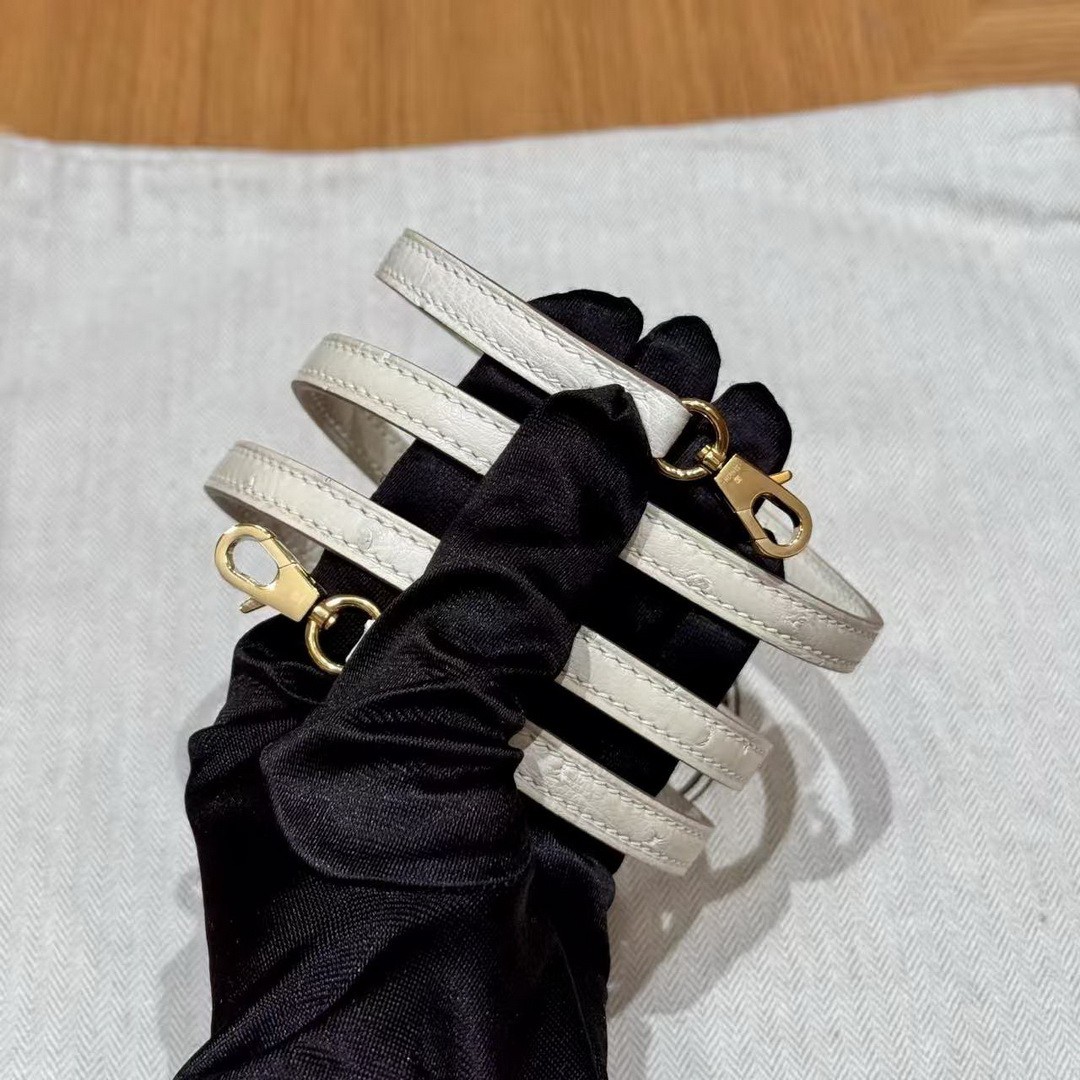
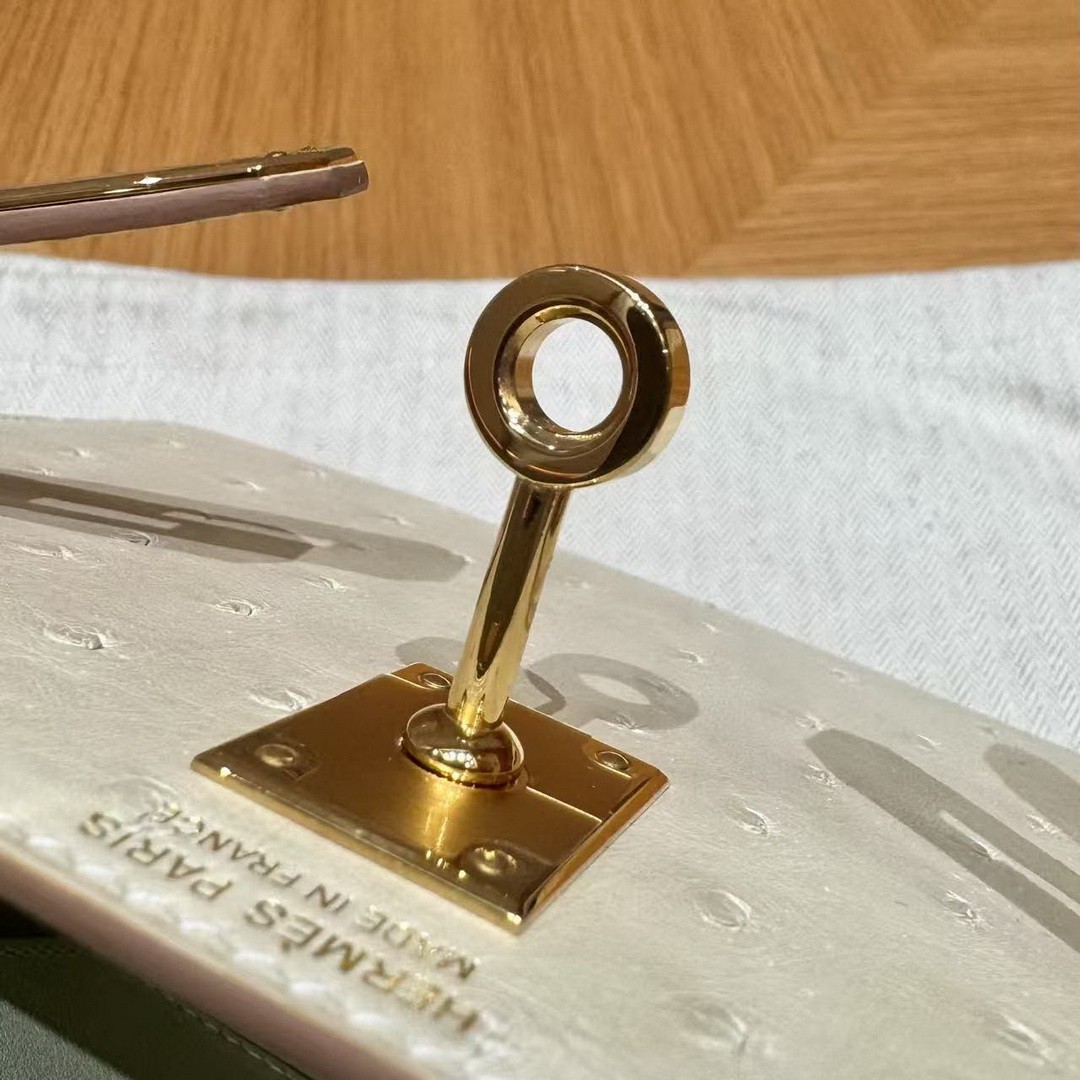
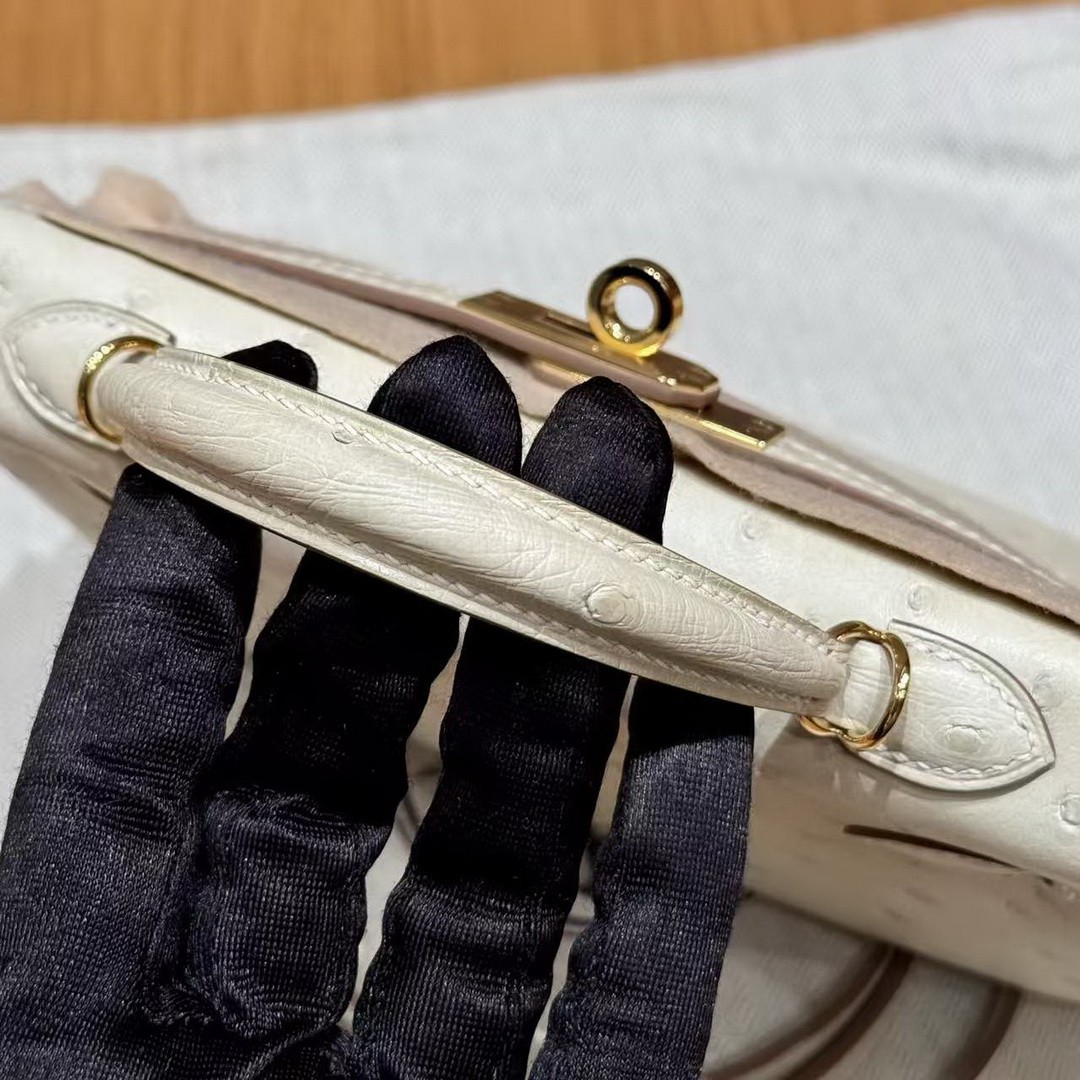
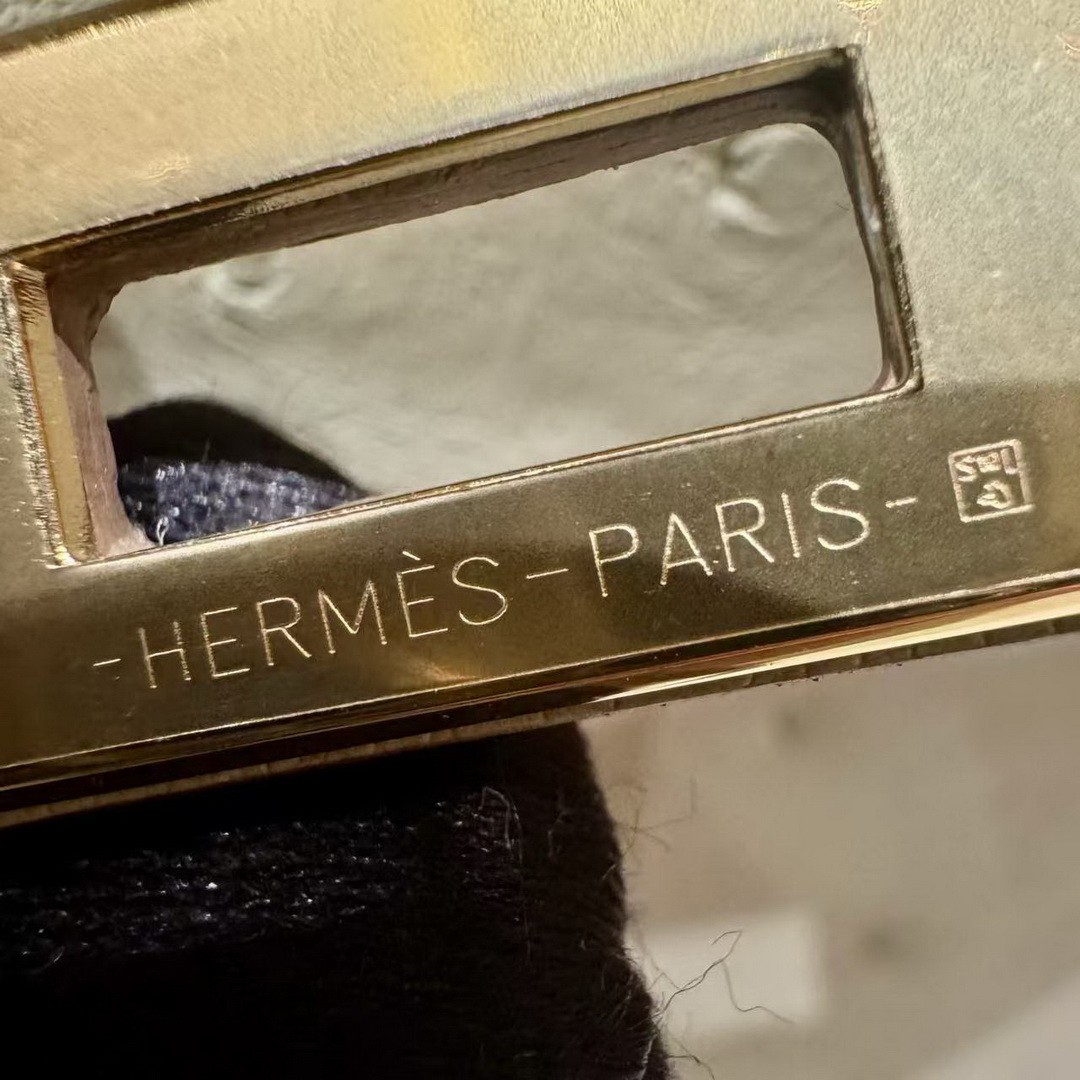
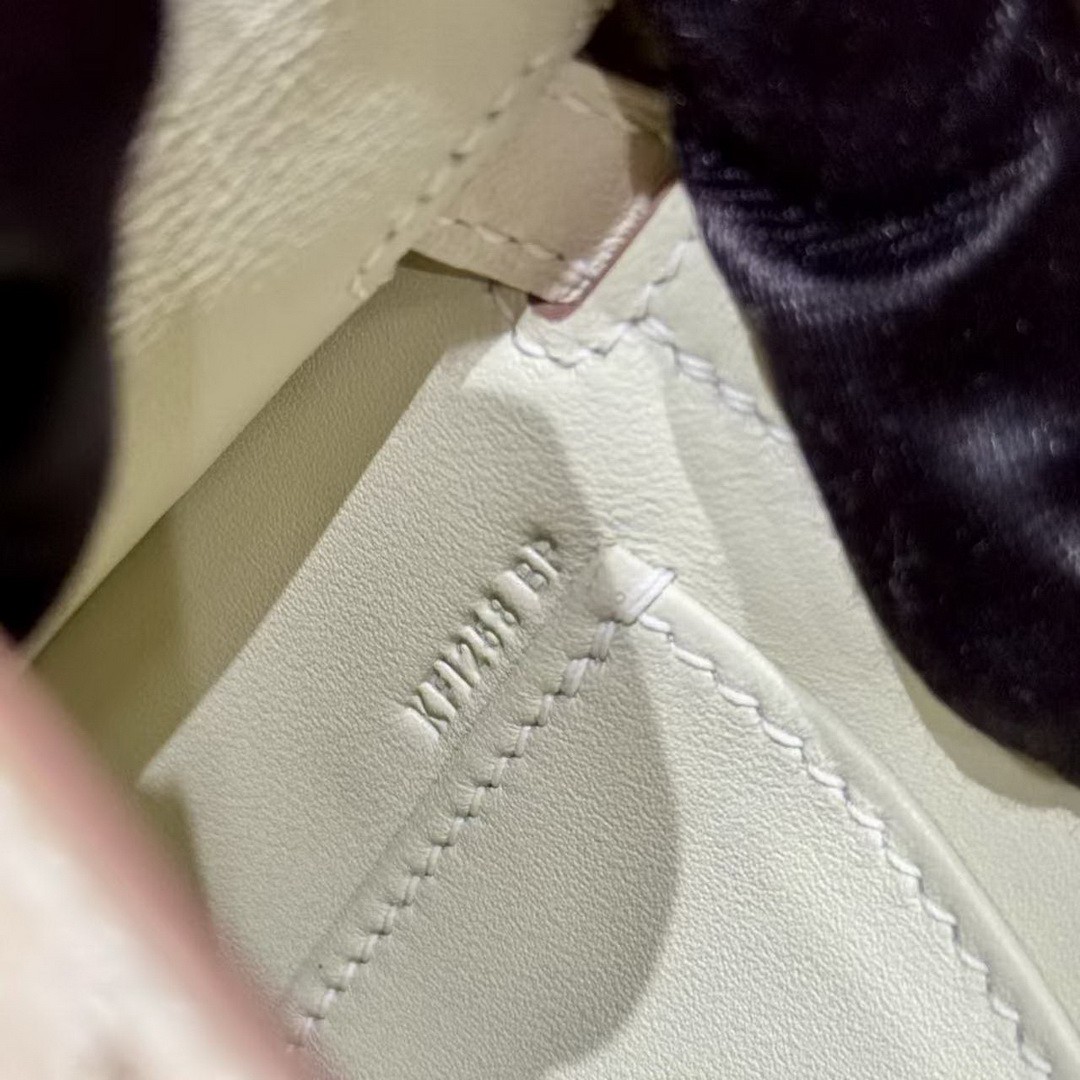
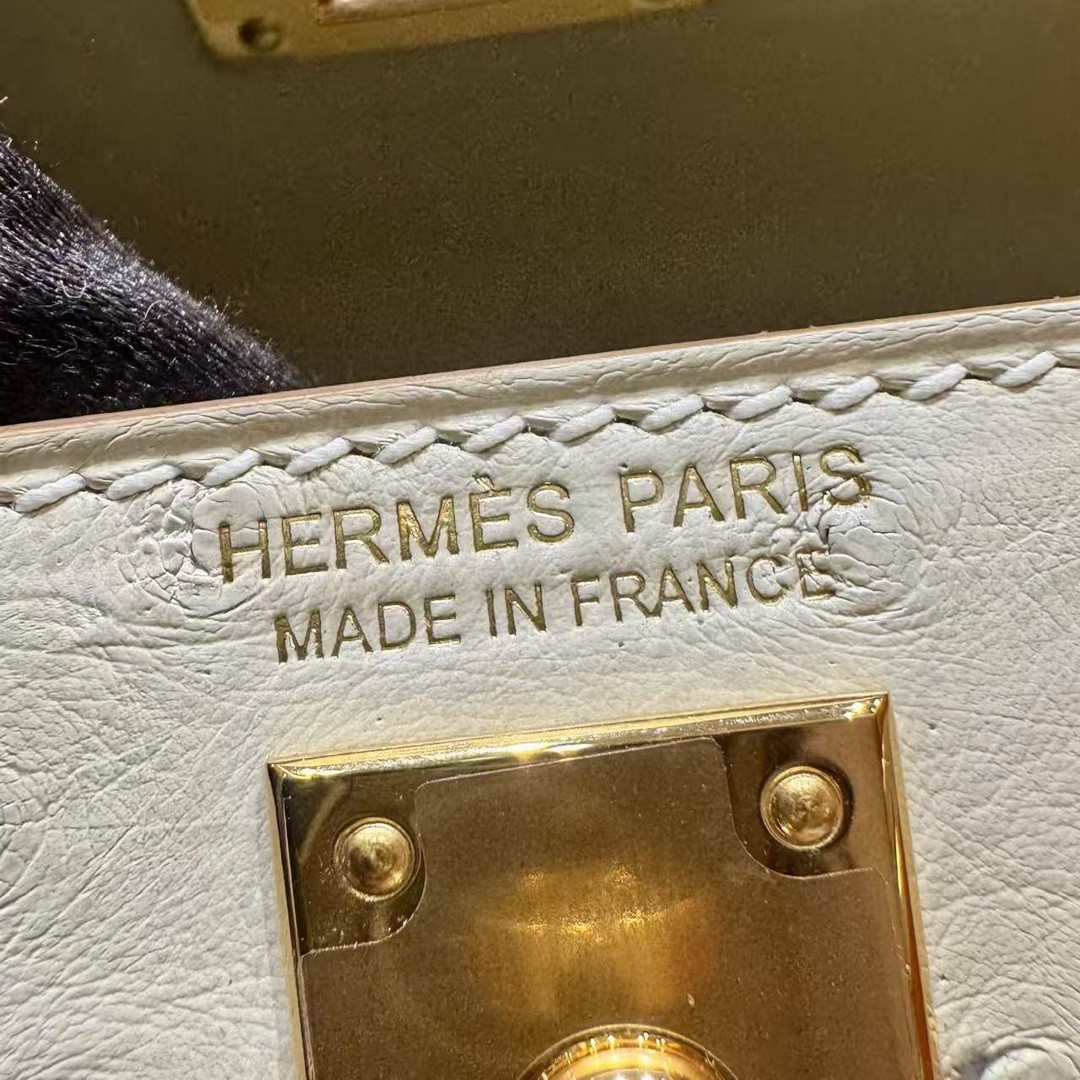
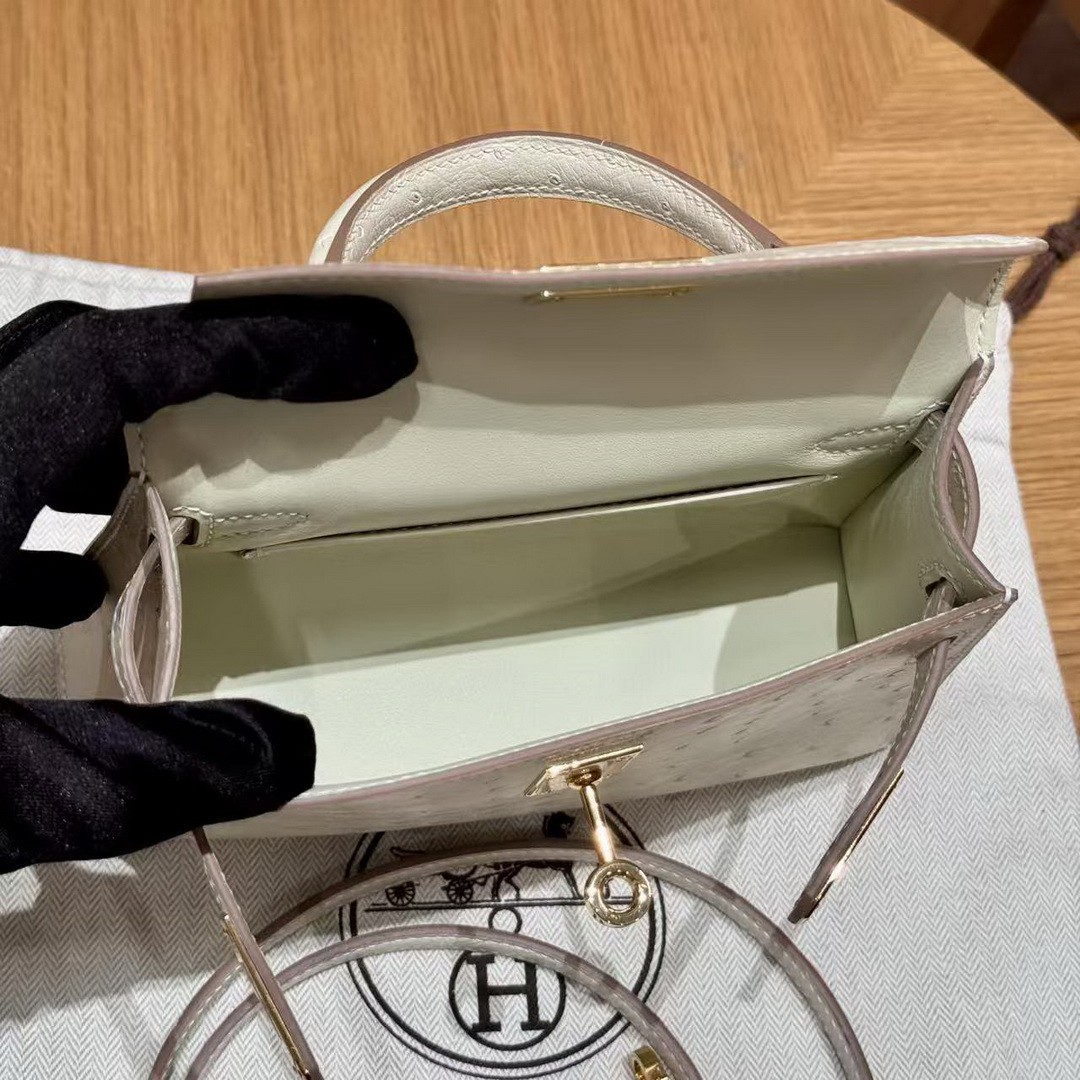
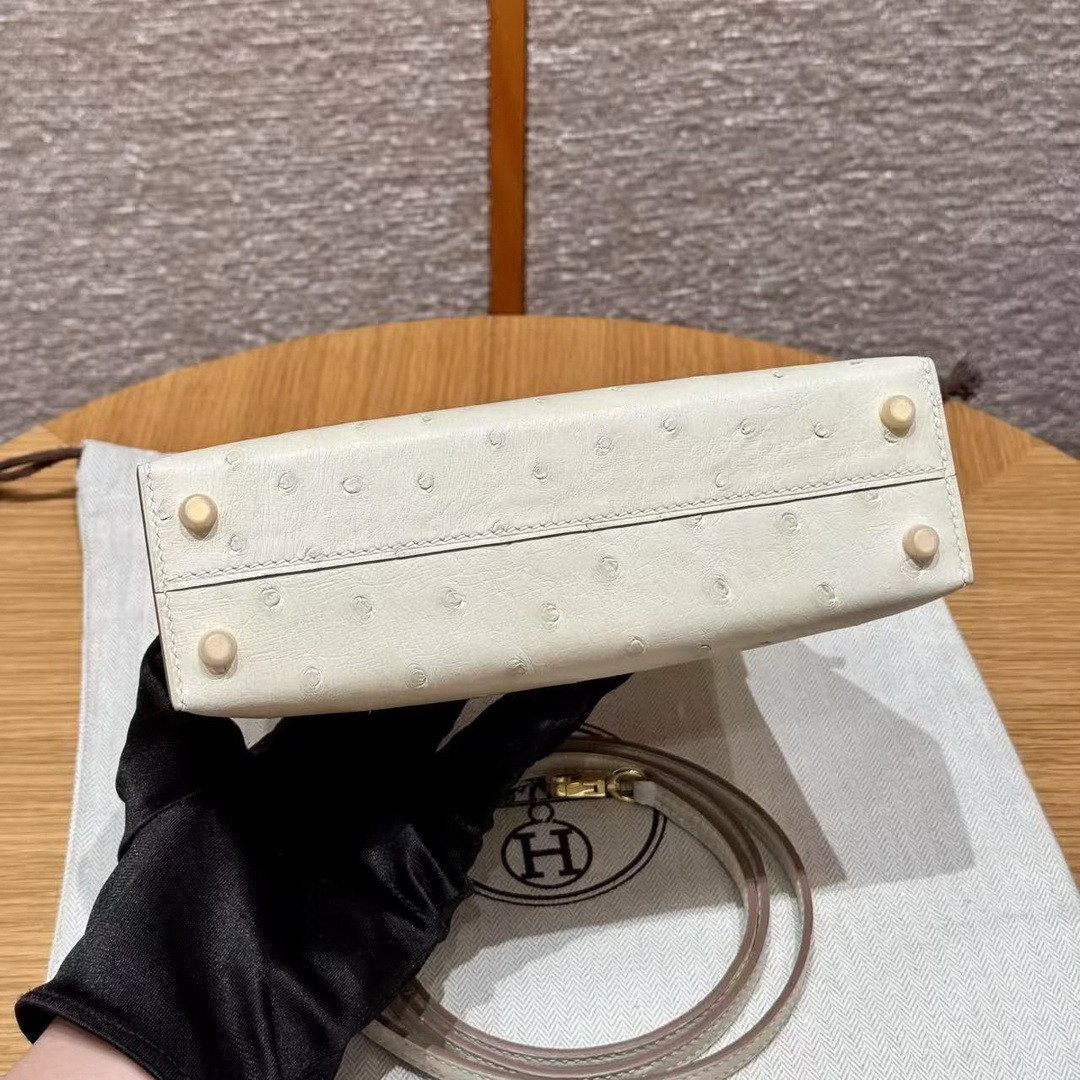
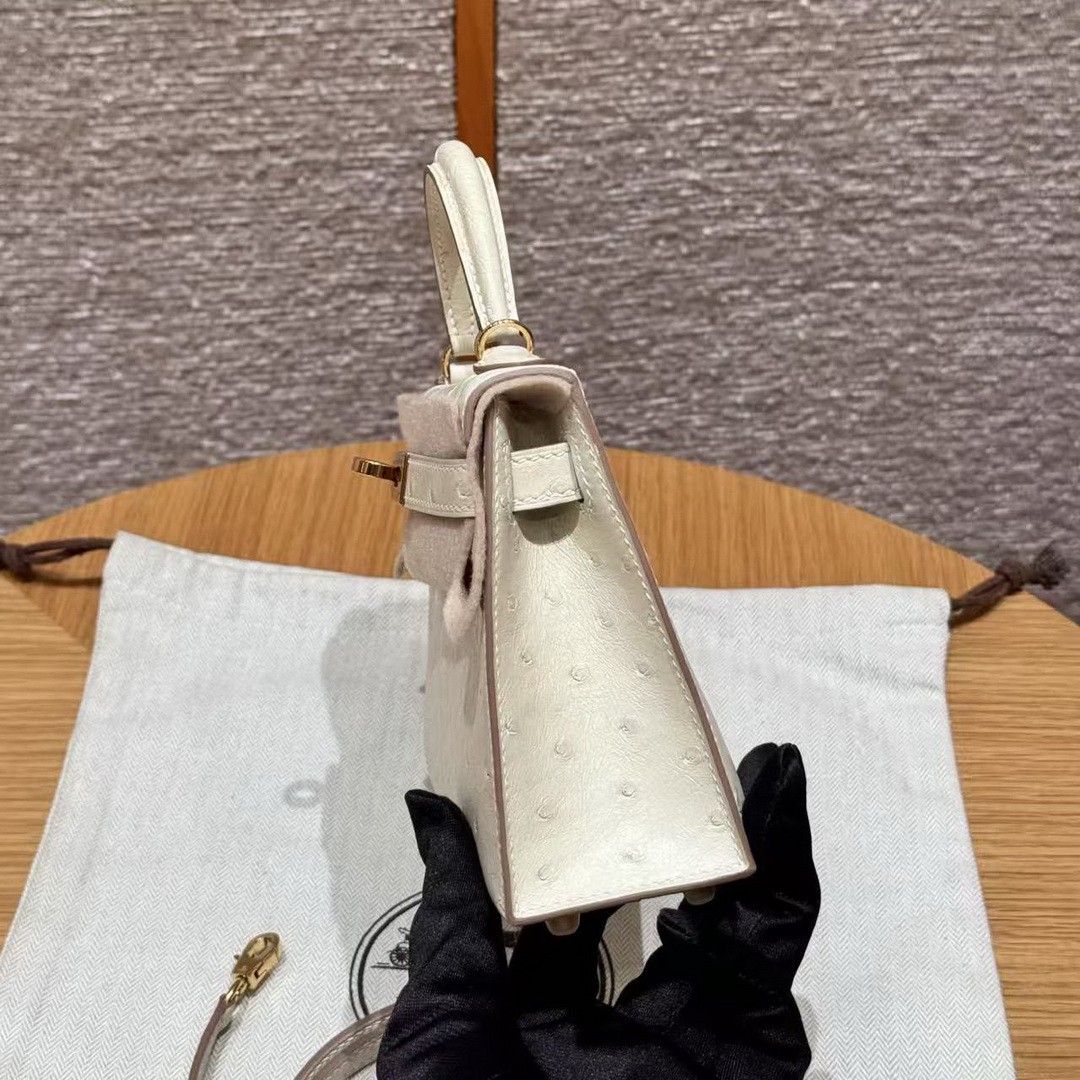
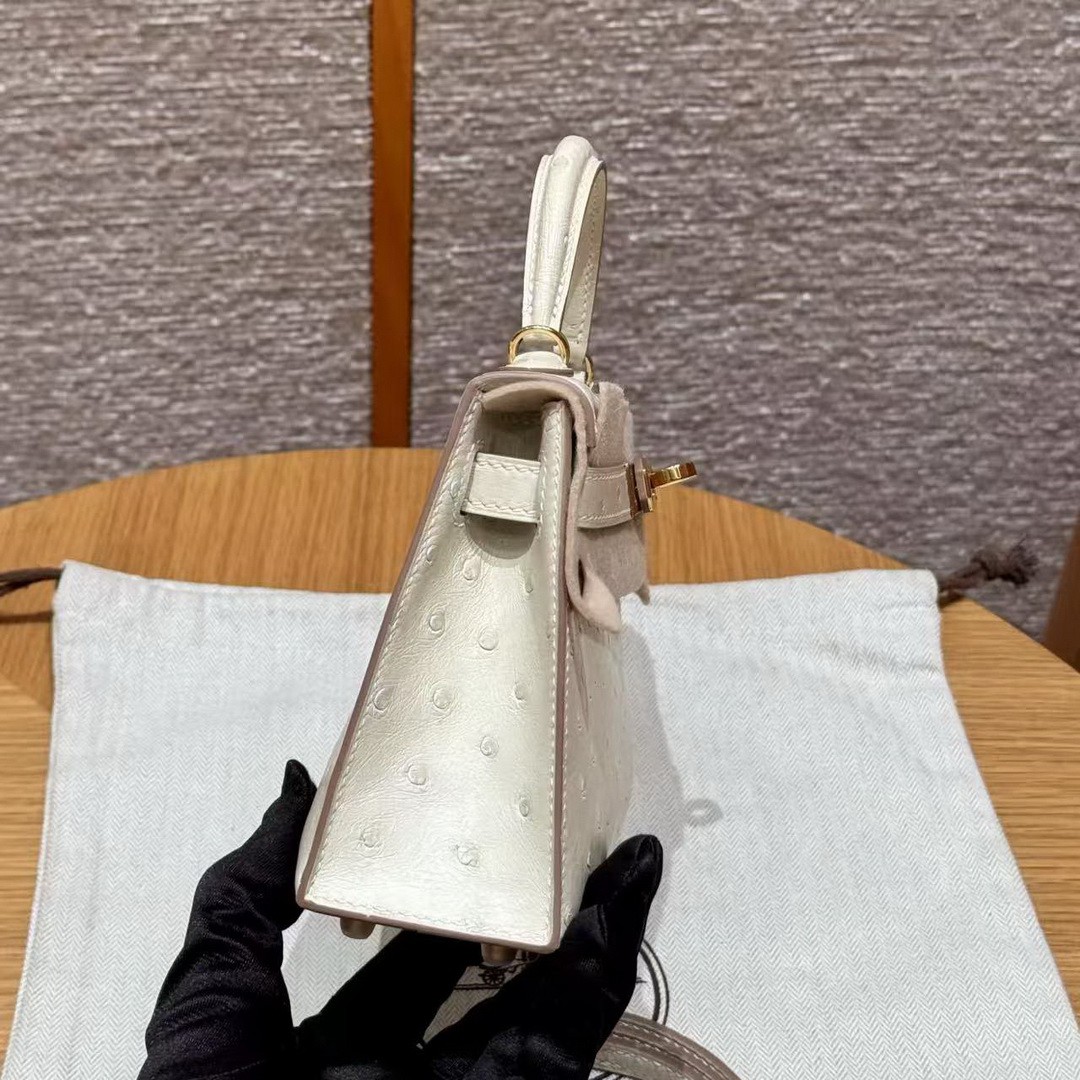





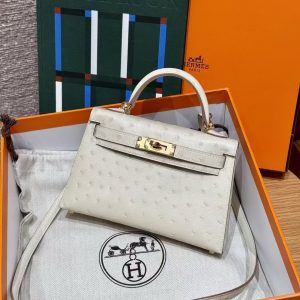
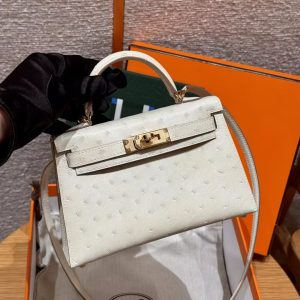
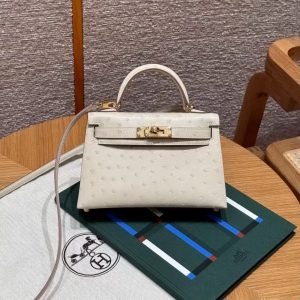
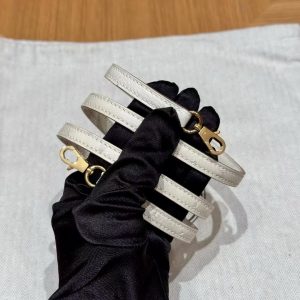
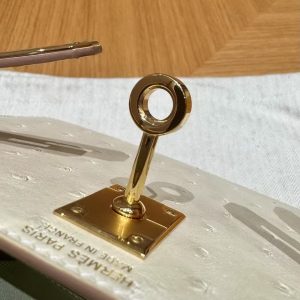
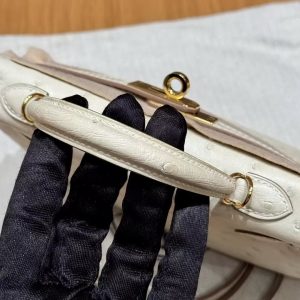
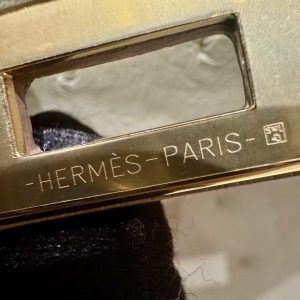
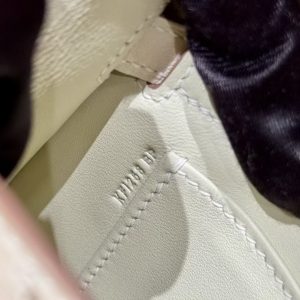
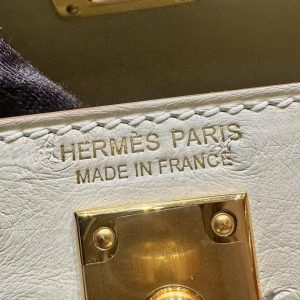
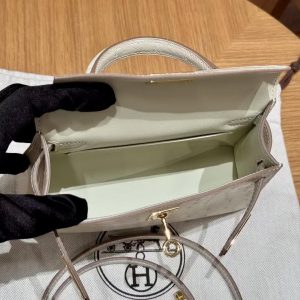
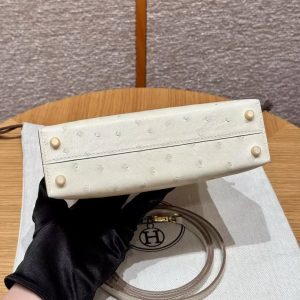
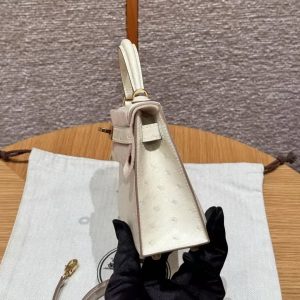
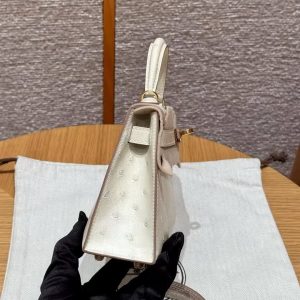
Hermes Kelly Mini 2 19 CM Bag Handmade In KK Ostrich Leather from South Africa Gold Hardware 8L Beton
Original price was: $21,800.00.$1,999.00Current price is: $1,999.00.
Style: Hermes Kelly Mini 2 19 CM Bag
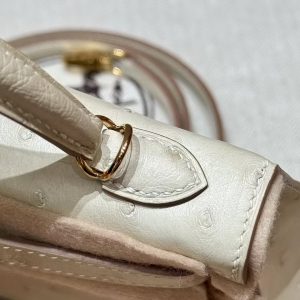
Color: 8L/ Beton
Size: 19*12*5.5 CM
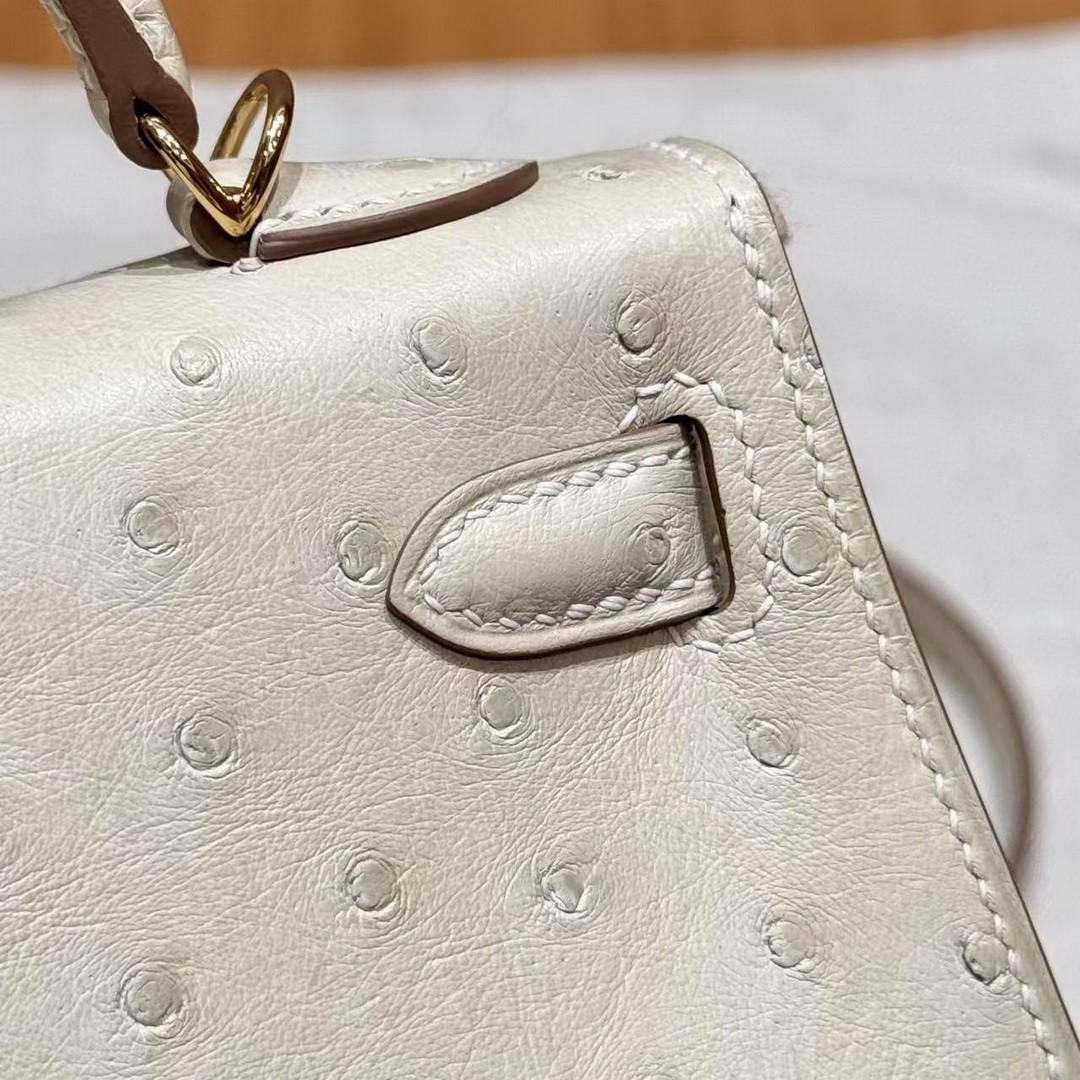
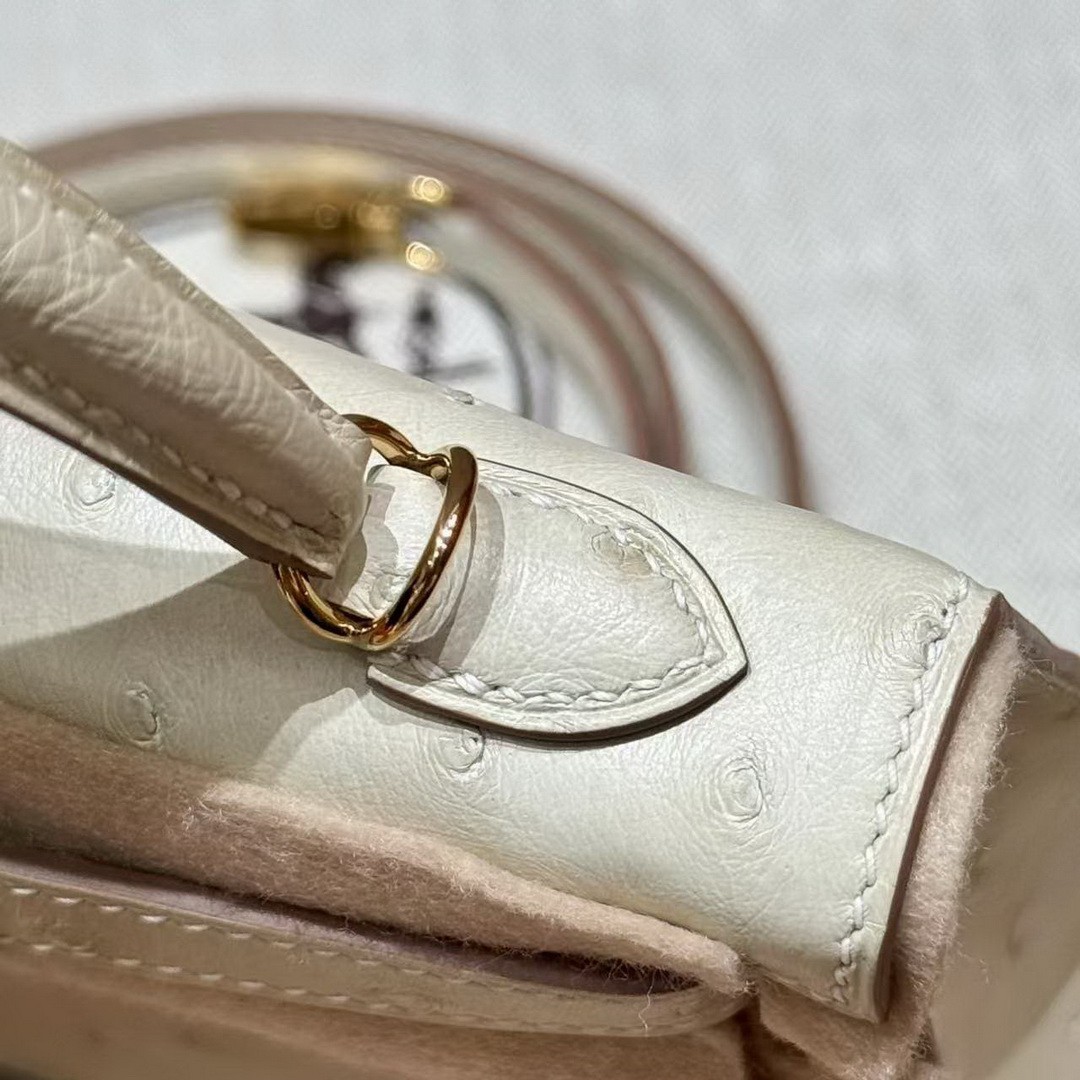
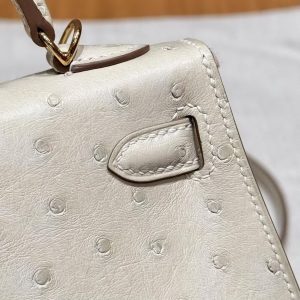
Leather: KK Ostrich Leather from South Africa
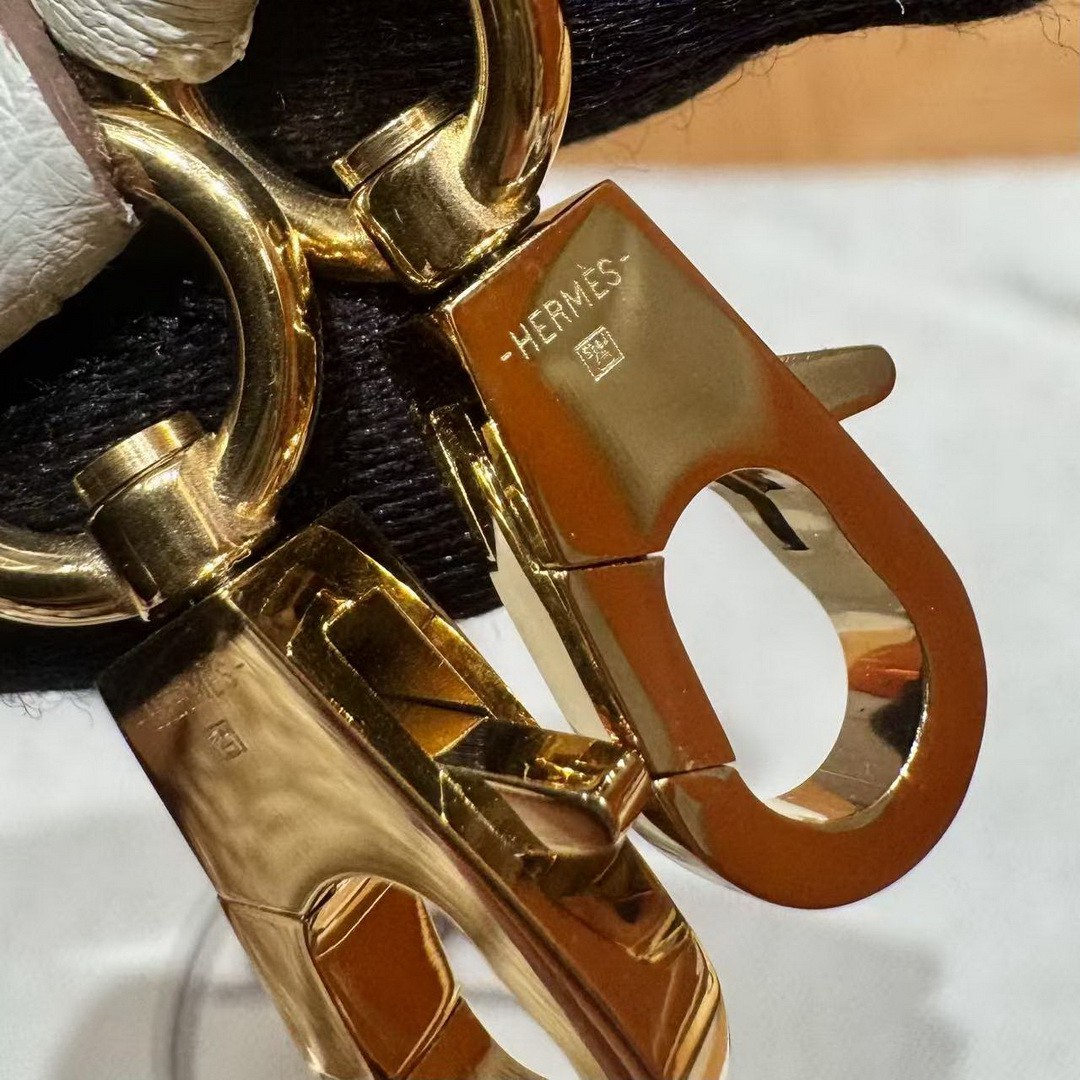
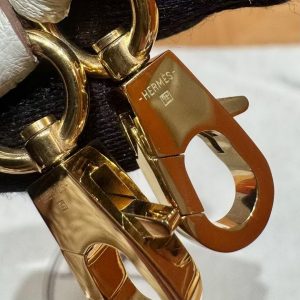
Hardware: Gold
Beton is the color of poured concrete, and the comparison flatters it: a pale greige, cooler than cream and warmer than grey, with none of the pink that pushes similar tones toward beige. Ostrich gives that flat-sounding description a surface full of small events — quill points that catch raking light like the skin of an orange.
The skins come from South African farms, the long-standing source for this material, and the hide behaves like something engineered rather than grown: flexible on day one, resilient to knocks and light rain, and it softens rather than dries over the years. Gold hardware against beton is a quiet marriage of warm and cool that suits charcoal tailoring and ivory knitwear alike.
I take this one to the places where I want to look considered without looking loud — gallery openings, client lunches, the kind of hotel lobby where everyone reads everyone else’s bag first. The load is a phone, a card case, keys, and perhaps a flat comb. At this size a hard sunglasses case is the one thing I leave behind, and I have never once missed it.
Upkeep is the price of pale ostrich. The follicles collect dust and the valleys collect anything oily, so keep a soft brush near the dust bag and never handle it right after hand cream. Pale exotics read every mark a season earlier than dark ones; in return, none of them look like this in a room.
Related products