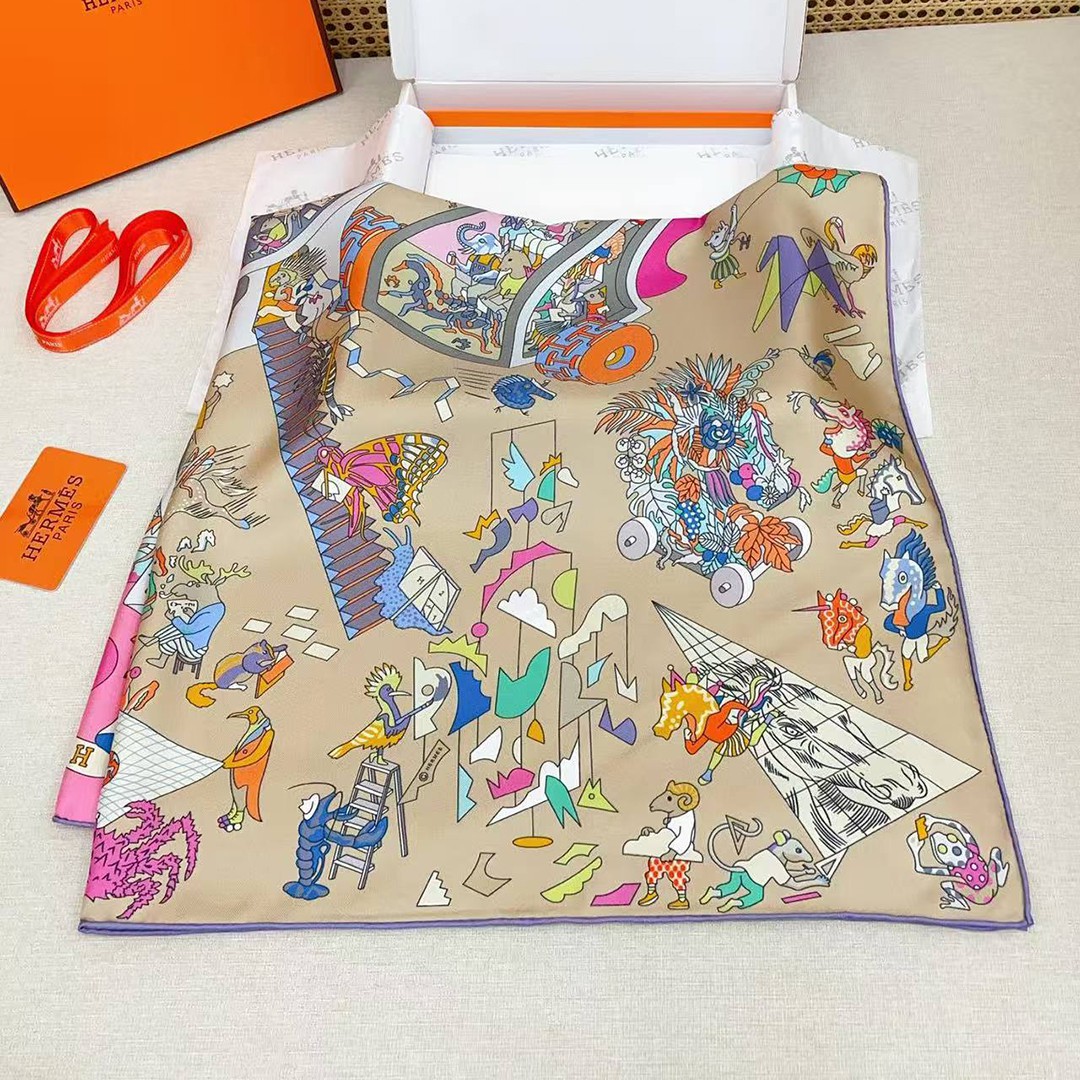
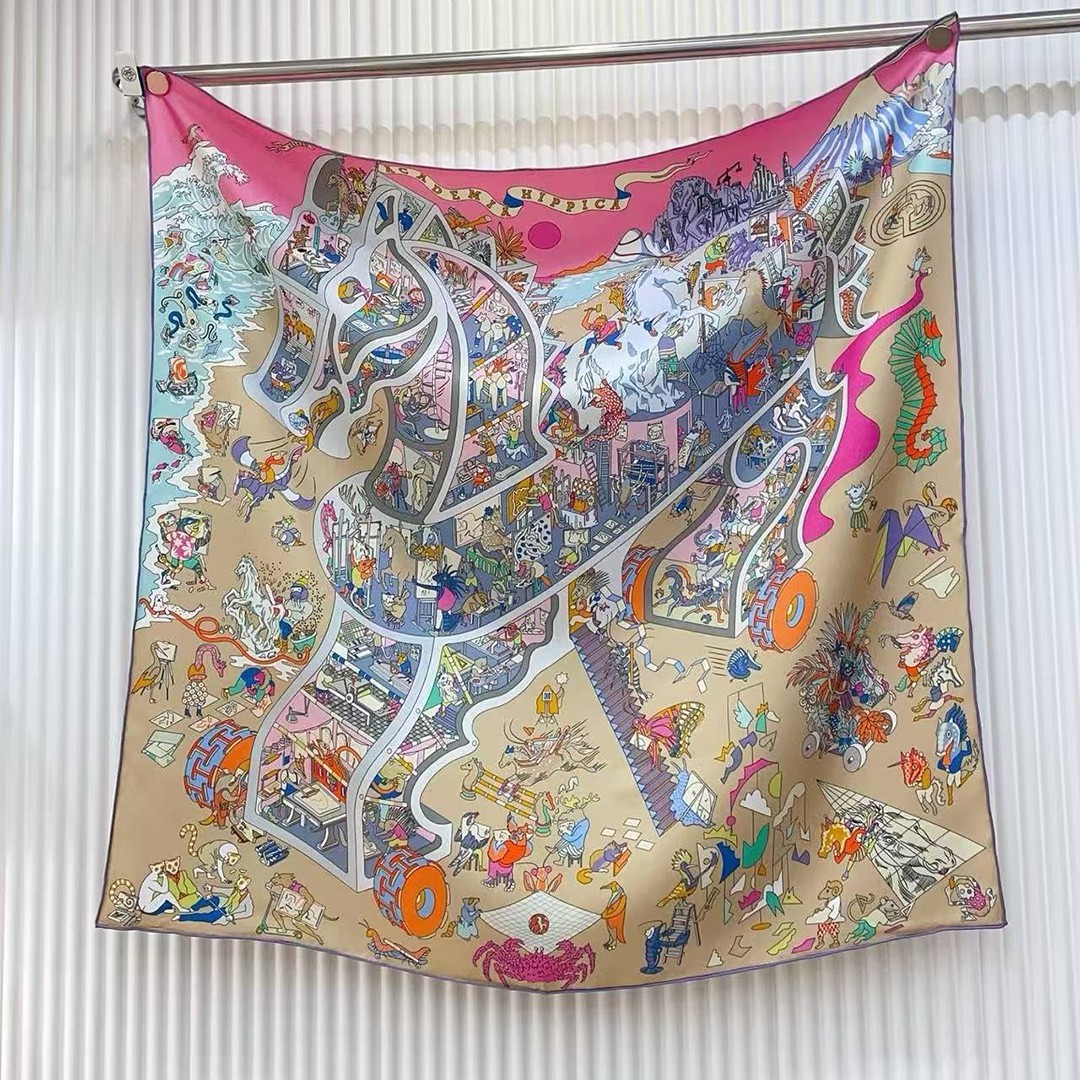
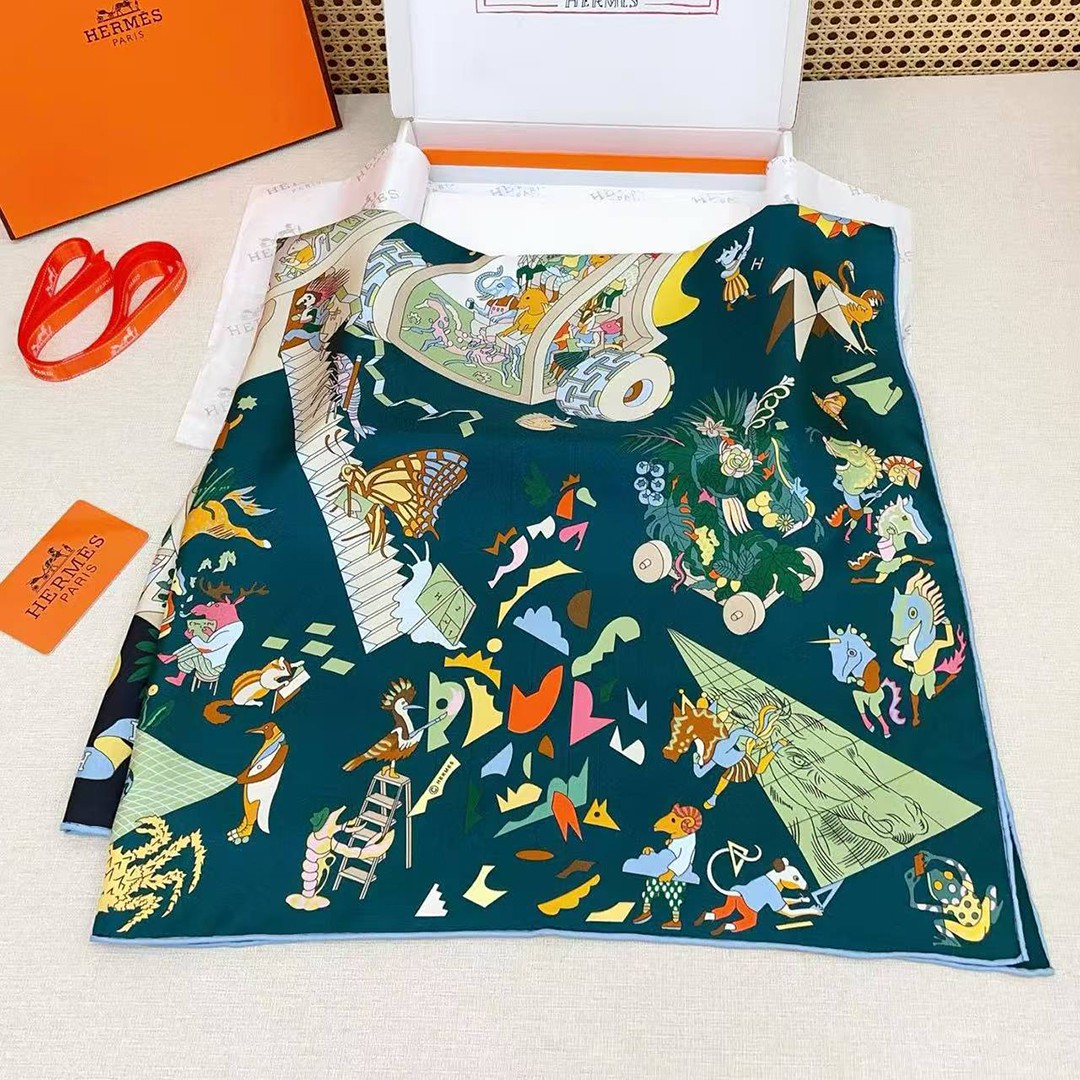
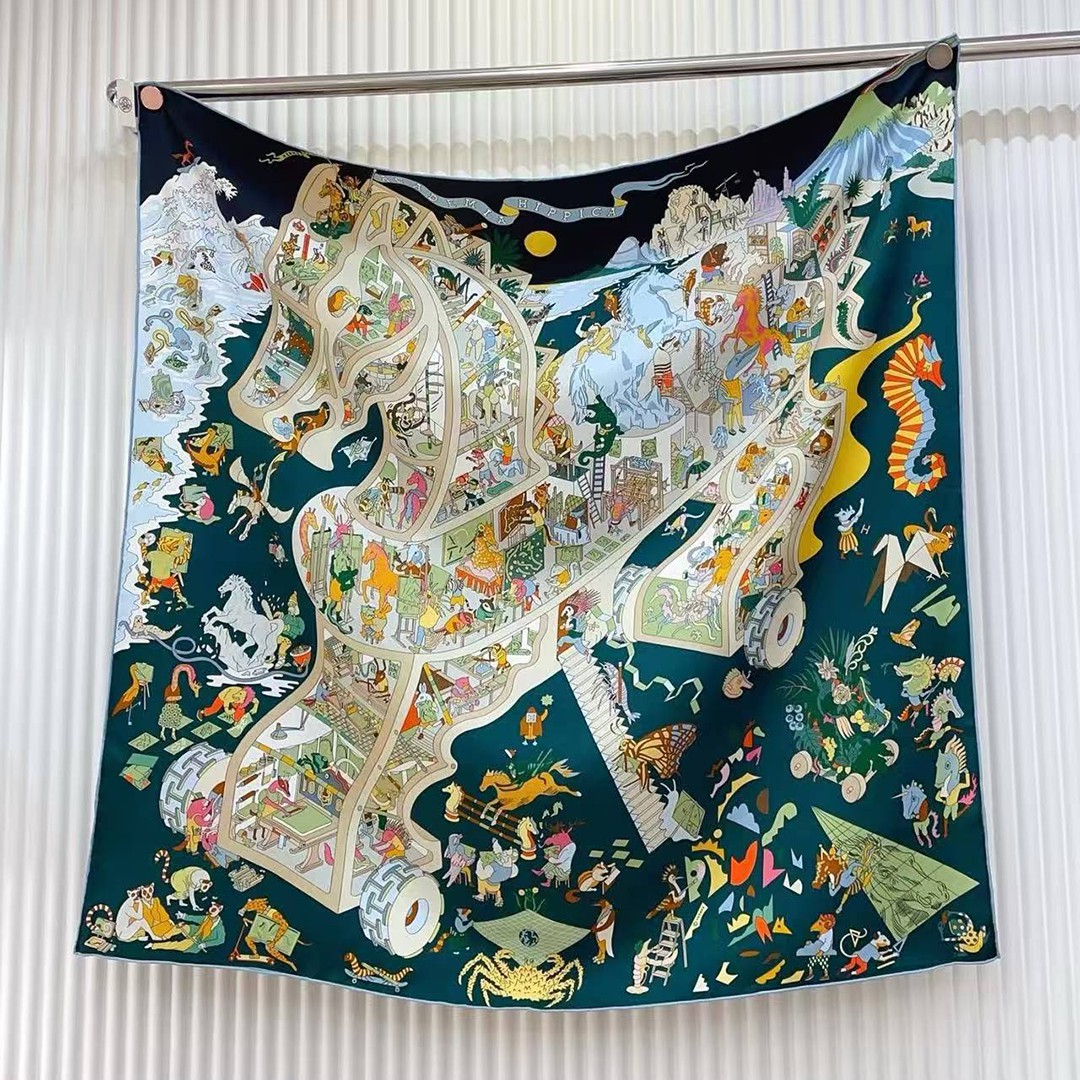
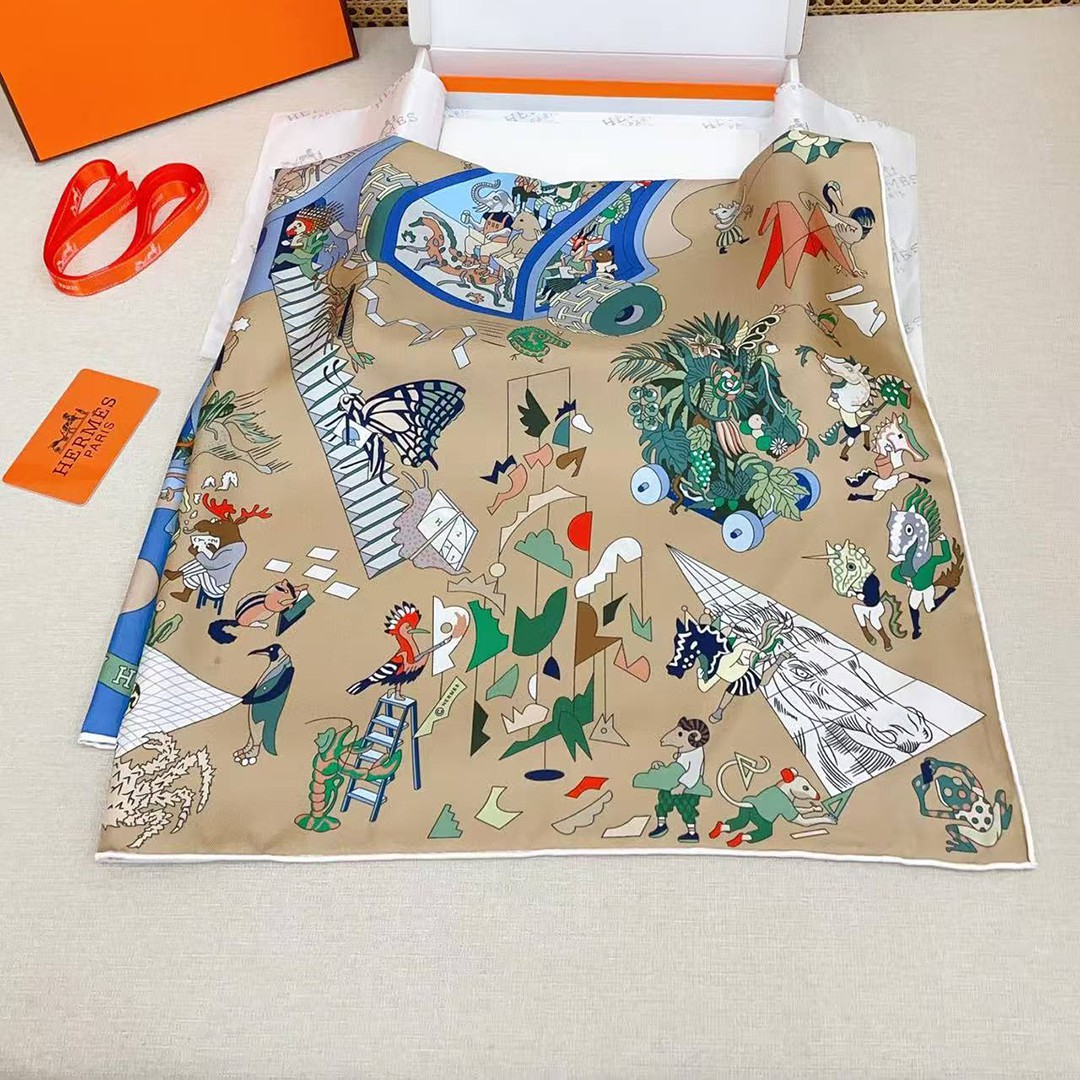
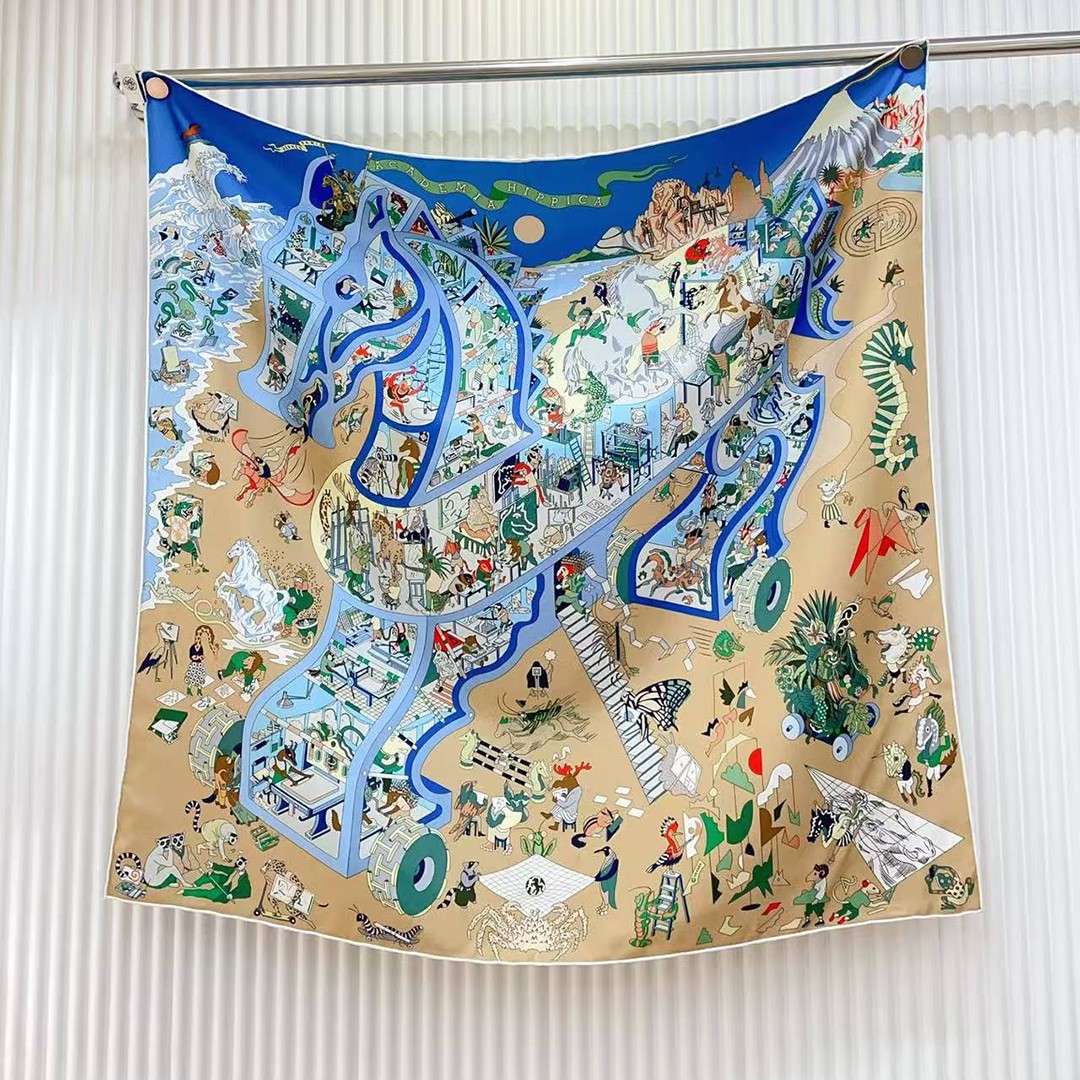
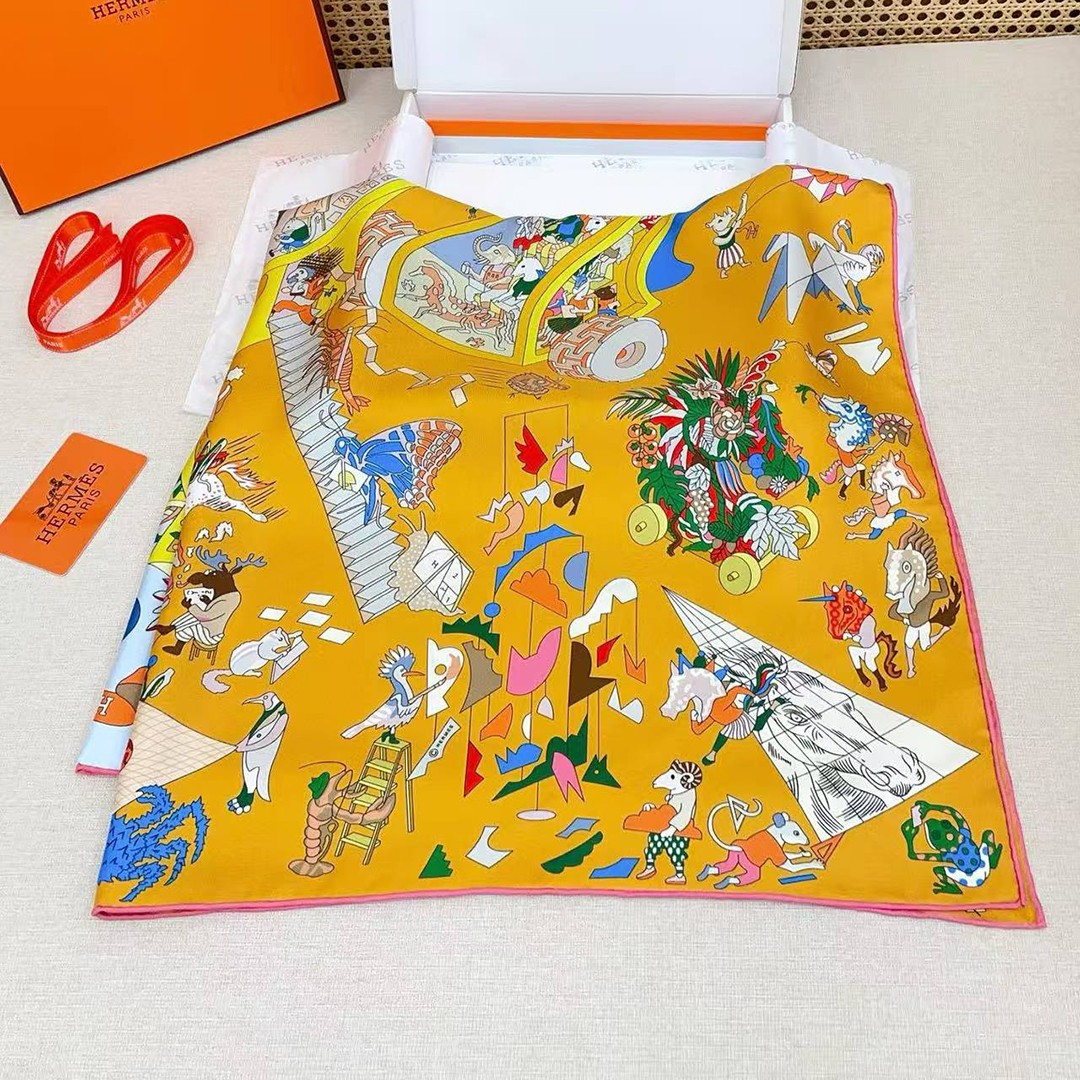
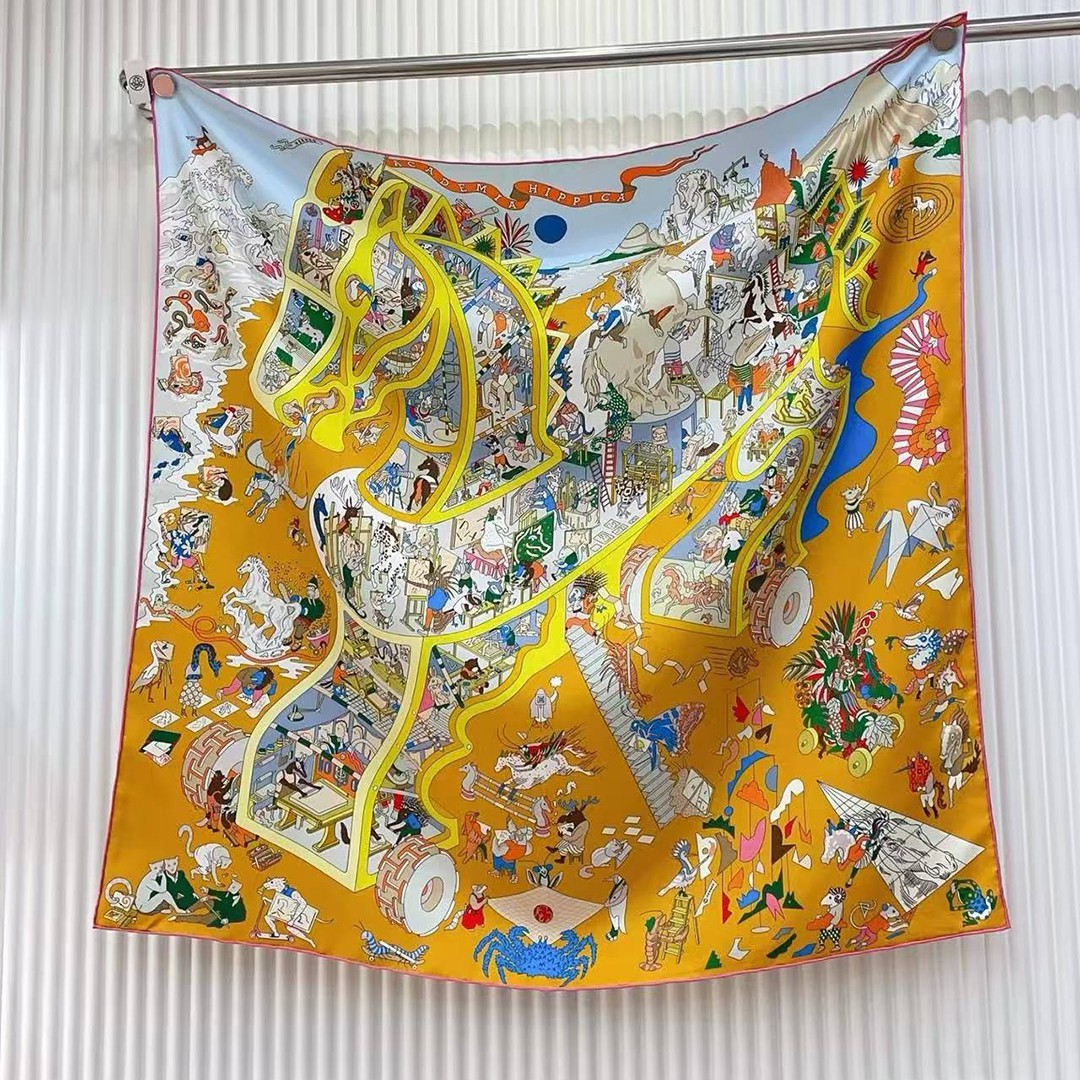
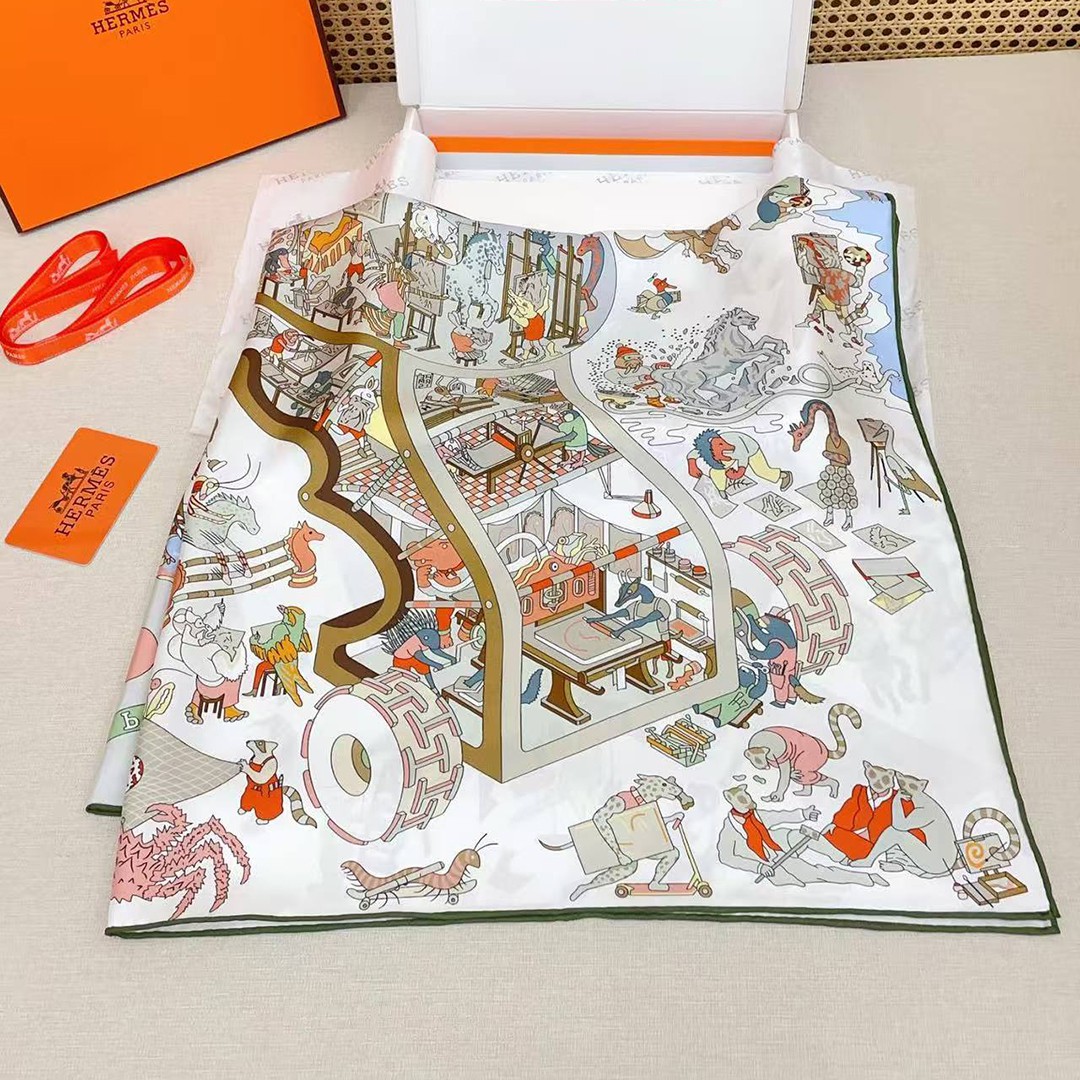

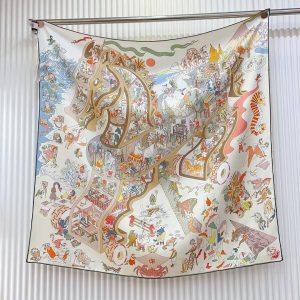
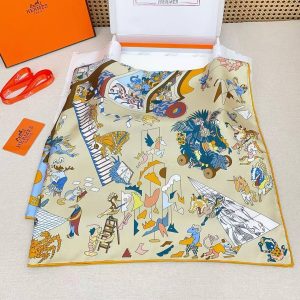
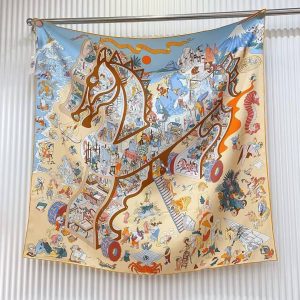
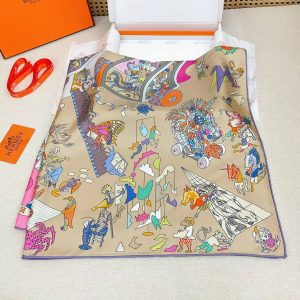
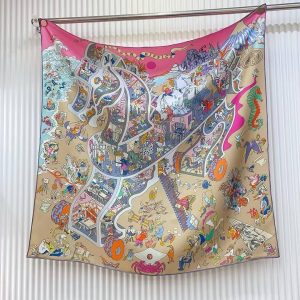
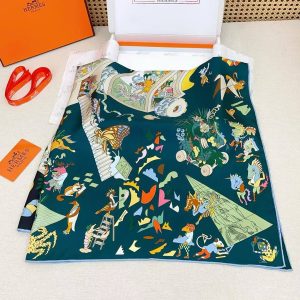
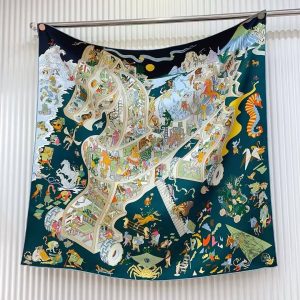
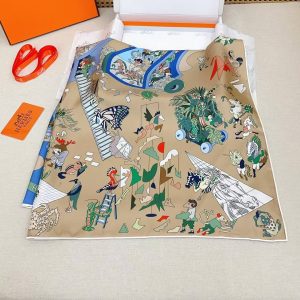
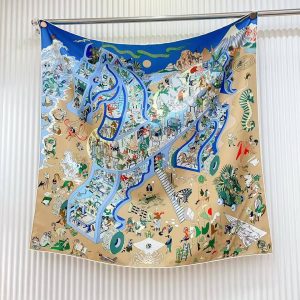
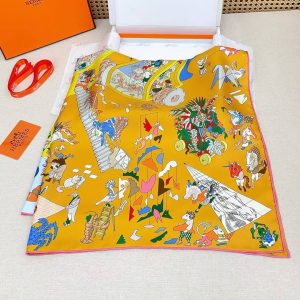
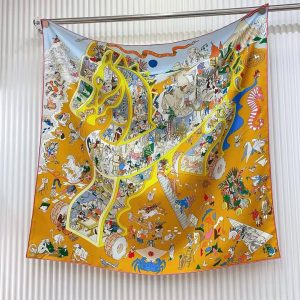
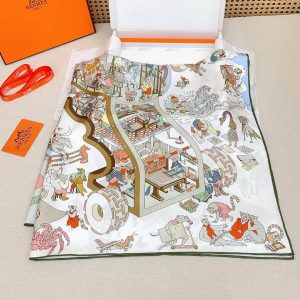
Hermes Academia Hippica Scarf 90 100% Silk H004281S 03
Original price was: $800.00.$99.00Current price is: $99.00.
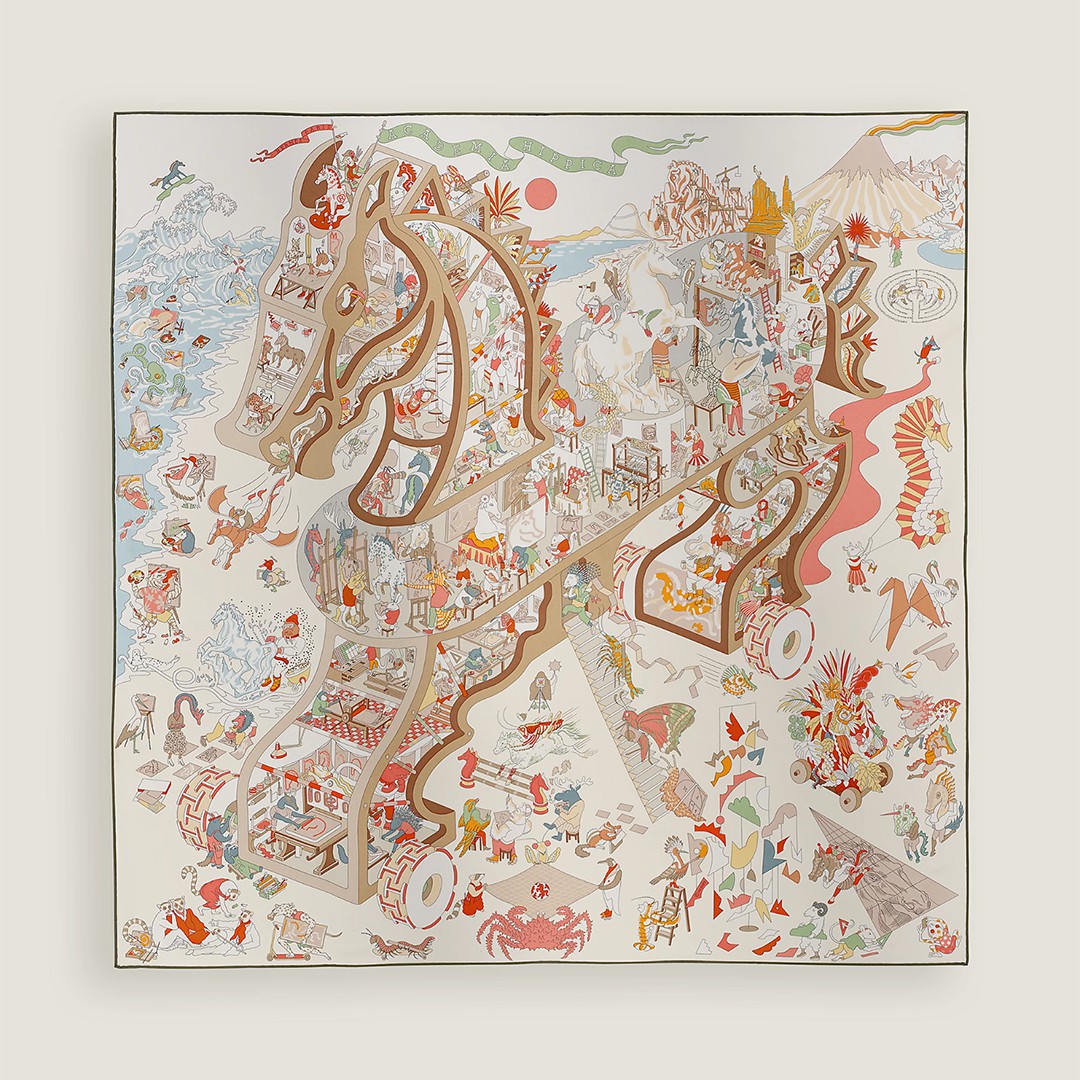
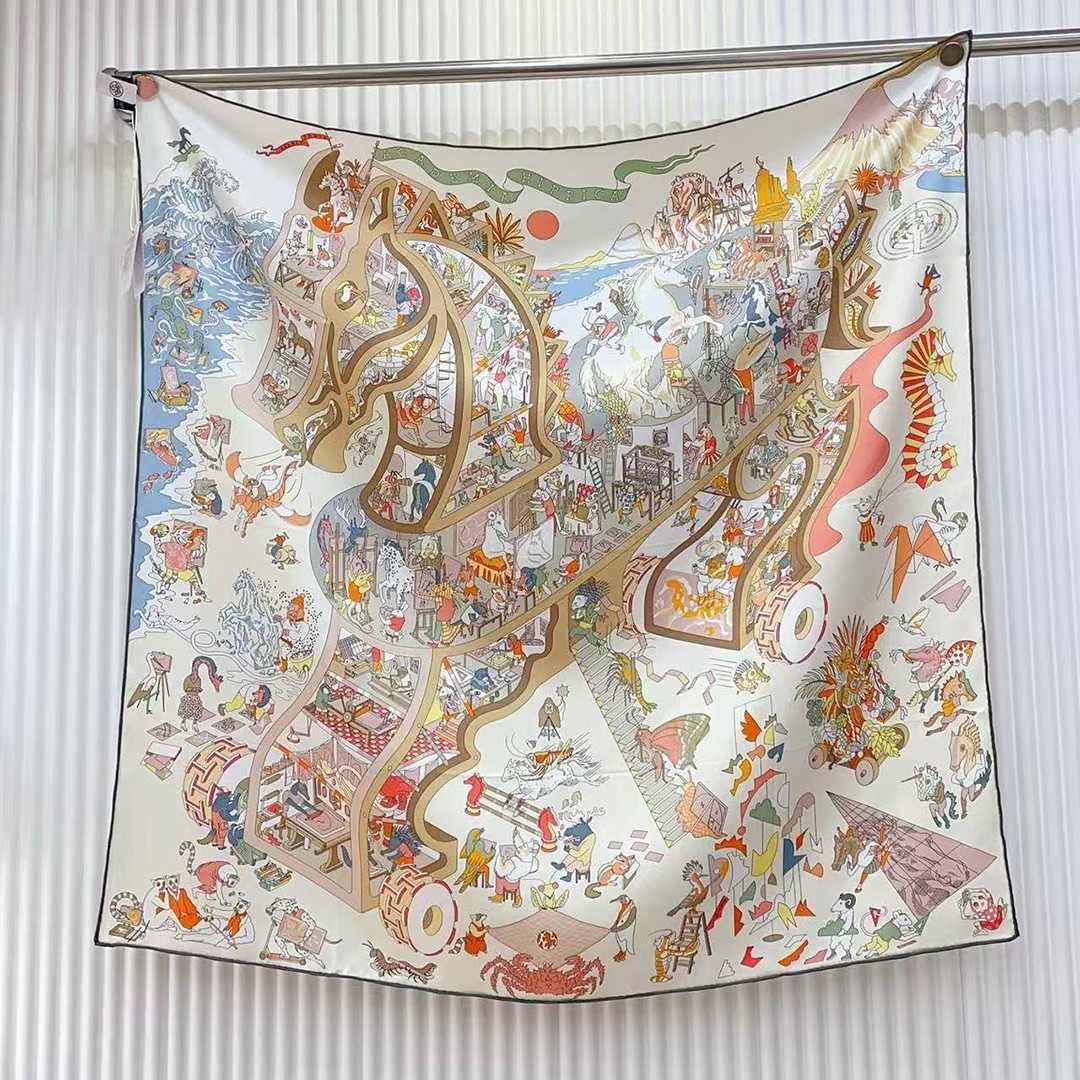
Academia Hippica scarf 90
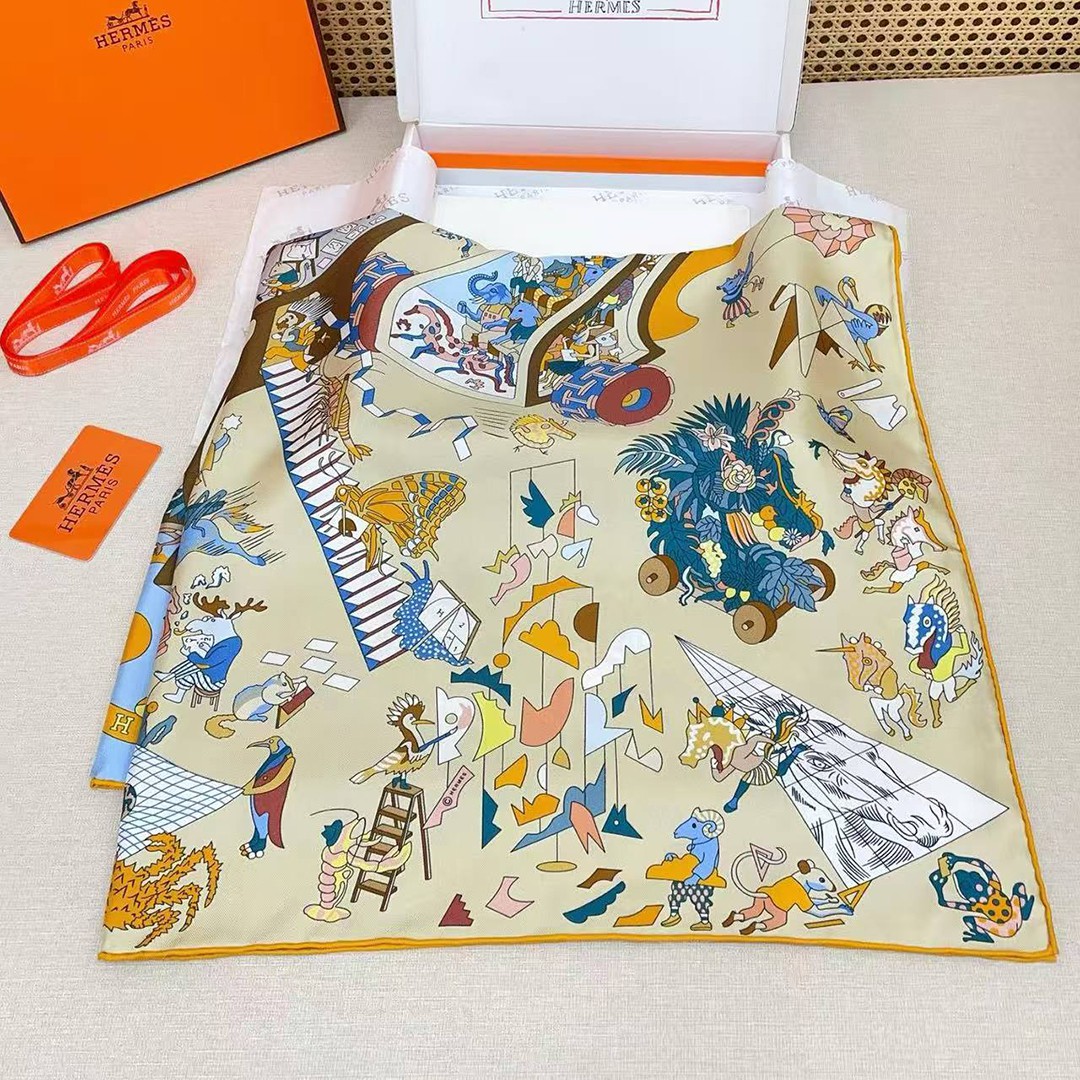
Scarf in silk twill with hand-rolled edges (100% silk).
Made in France
Designed by Jan Bajtlik
Dimensions: 34.8″ x 34.8″ | As this scarf is hand-rolled, the dimensions indicated may vary.
Product reference: H004281S 03
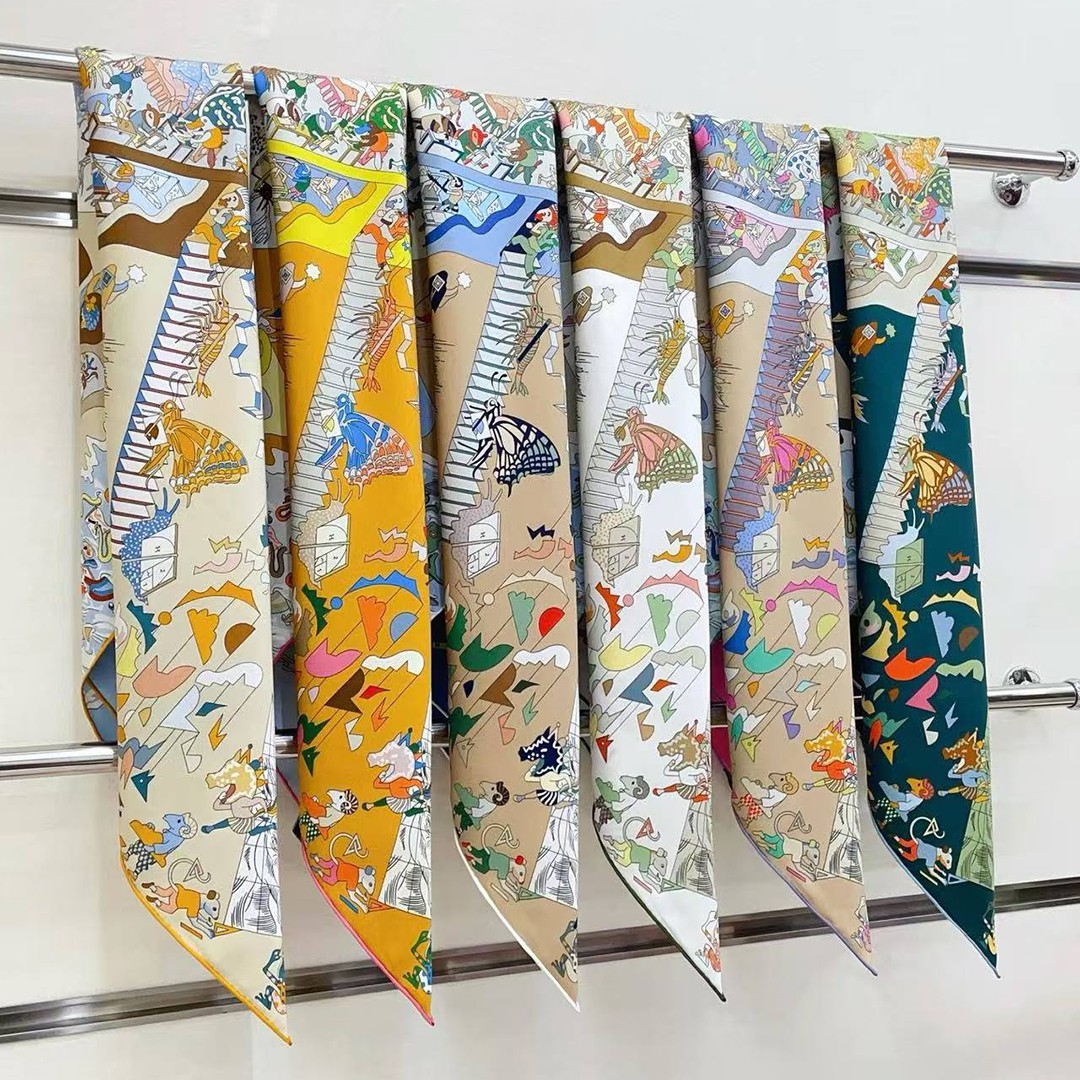
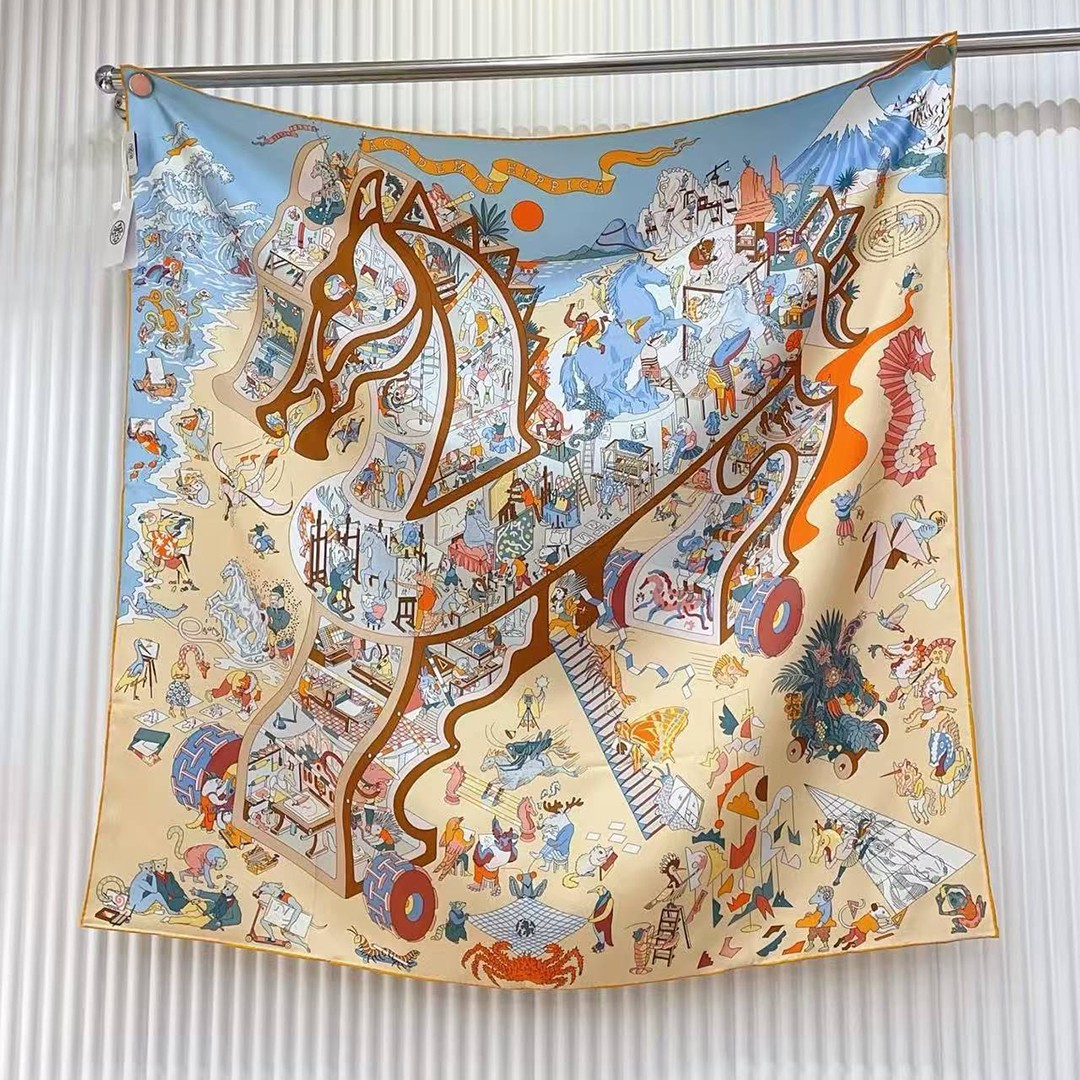
Some scarves are colour, some are drawing, and Academia Hippica is firmly the second kind: Jan Bajtlik’s illustration turns the square into a page from an imaginary naturalist’s notebook. I bought it for the print and stayed for how the silk ties. The border is the best part and almost never seen when worn — a private joke with the wearer.
It is a strict 90 — 100% silk twill, 34.8 inches across, hand-rolled at the edges, so the hem is a rope of thread rather than a machine stitch. The scale of the drawing is calibrated for the format: small motifs at the corners, a full scene through the middle, and a border that frames all of it. Worn, the corners drape a fraction differently from the sides, the way hand-finished squares do.
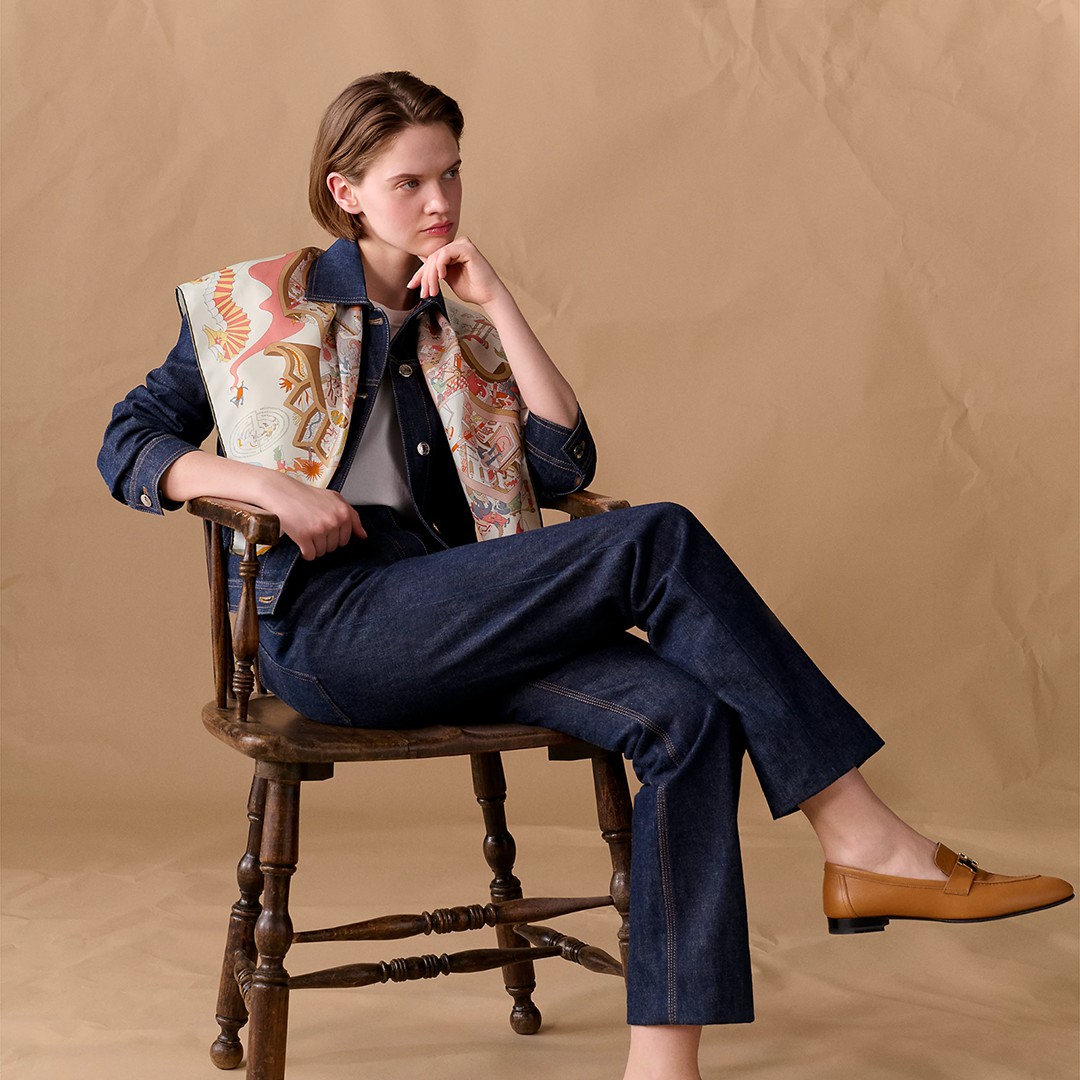
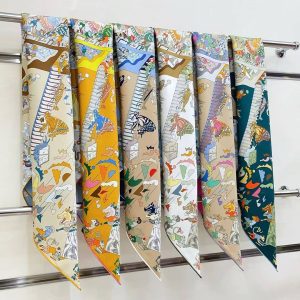
I wear mine folded narrow along the collar bone, ends loose, with a white shirt and grey wool — the print becomes a stripe of story at the throat. Tied at a bag handle, the same square reads as an illustrated ribbon. Two lives, one scarf, and it is good at both without trying. It has never failed a dinner or a lecture.
What nobody tells you about 90s: the fold lines from storage stay visible until the silk relaxes, and a dark print shows dust between wears. Roll it around a tube when you can, and let it air after unbinding; silk rewards a little ceremony. Hand-rolled edges mean an actual hand did the finishing.
Related products






Women
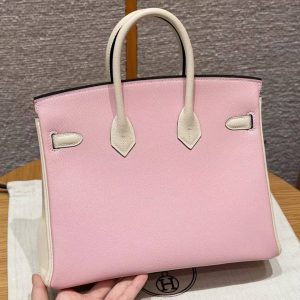
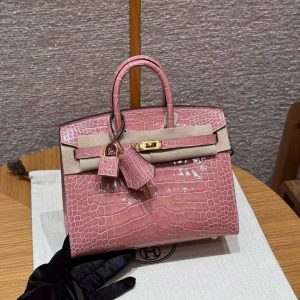
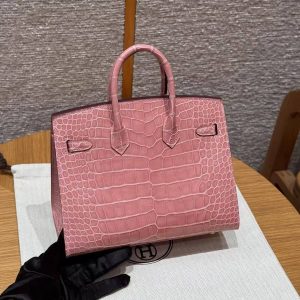
Hermes Birkin 20 Bag 1Q Rose Confetti Handmade In Bright American Alligator Leather Gold Hardware