
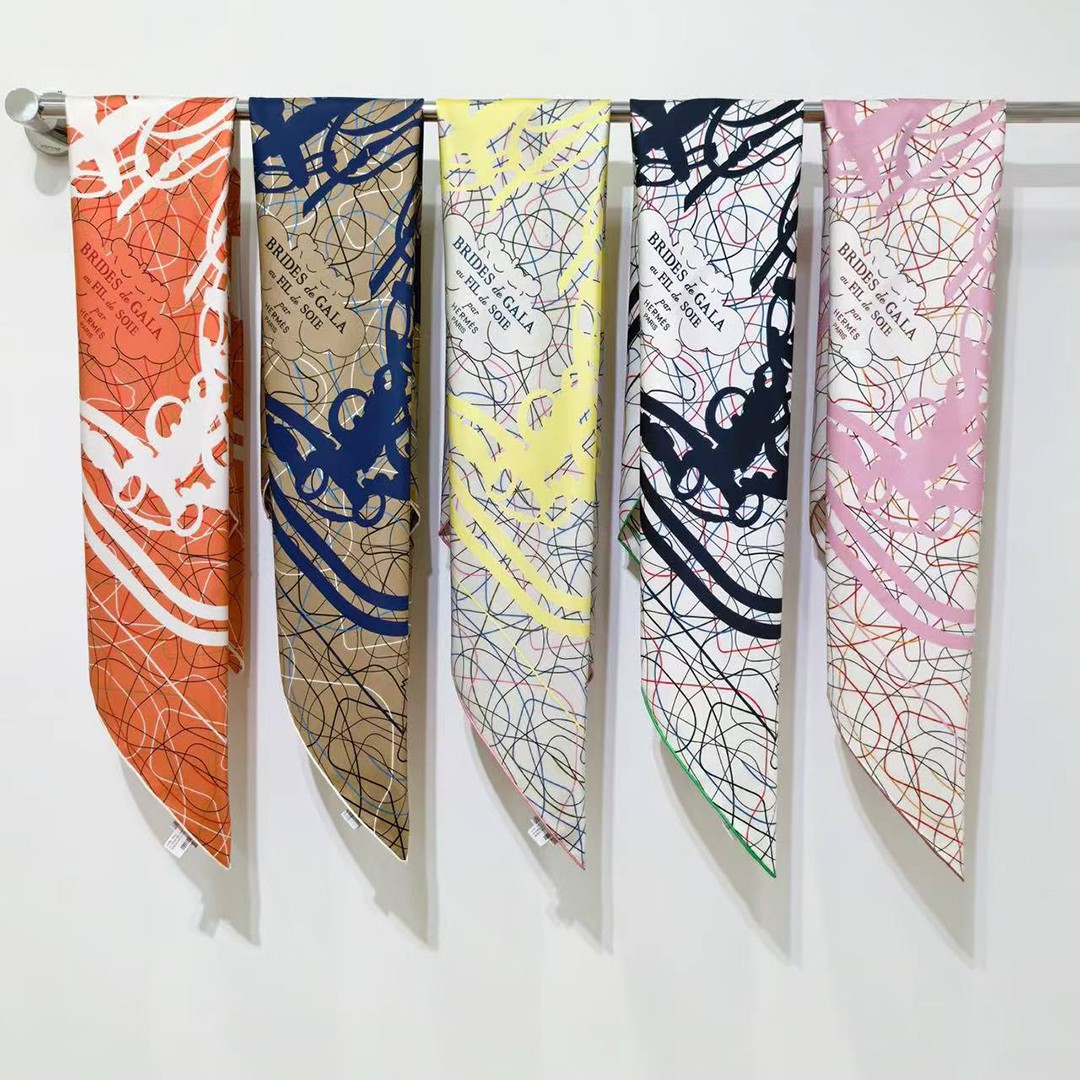
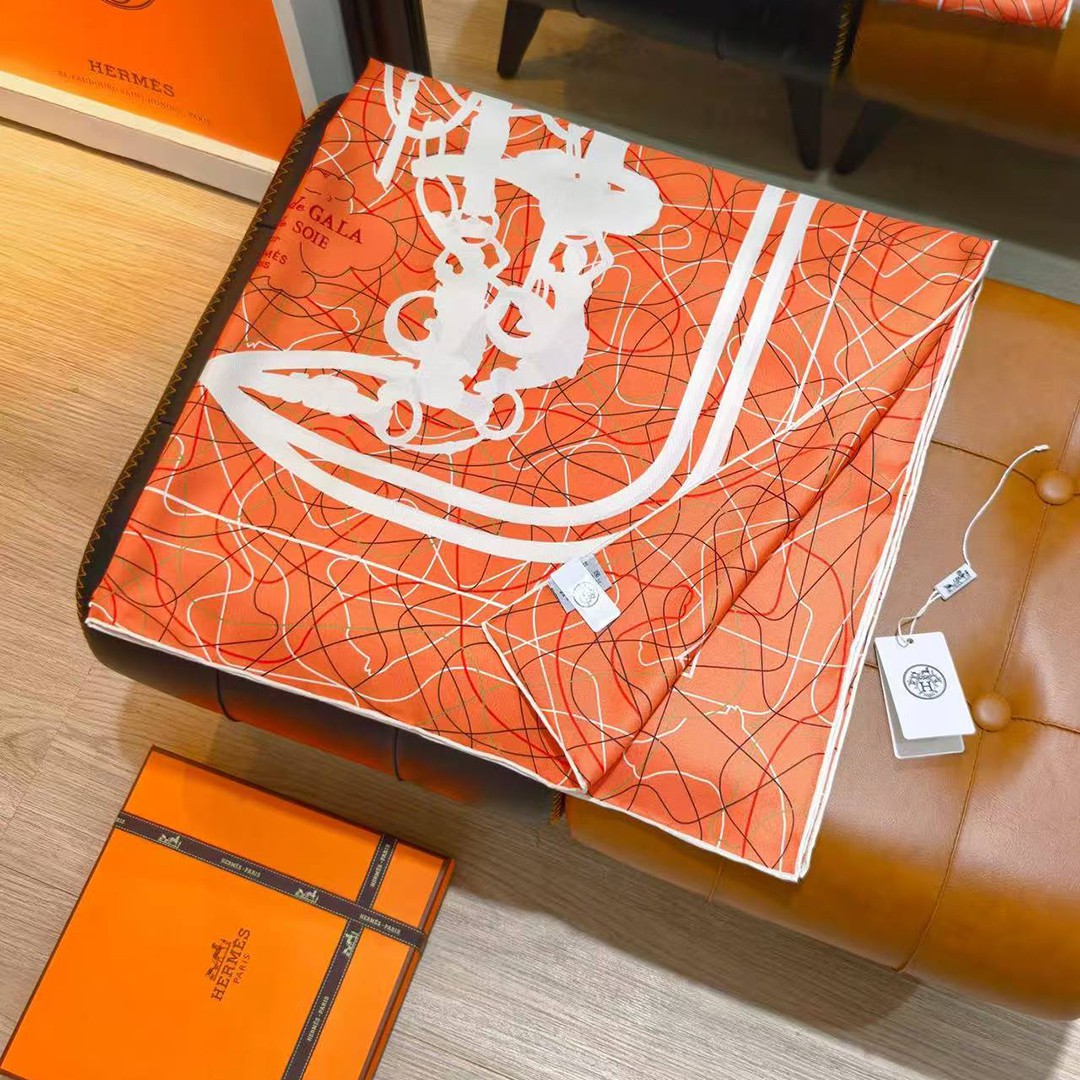
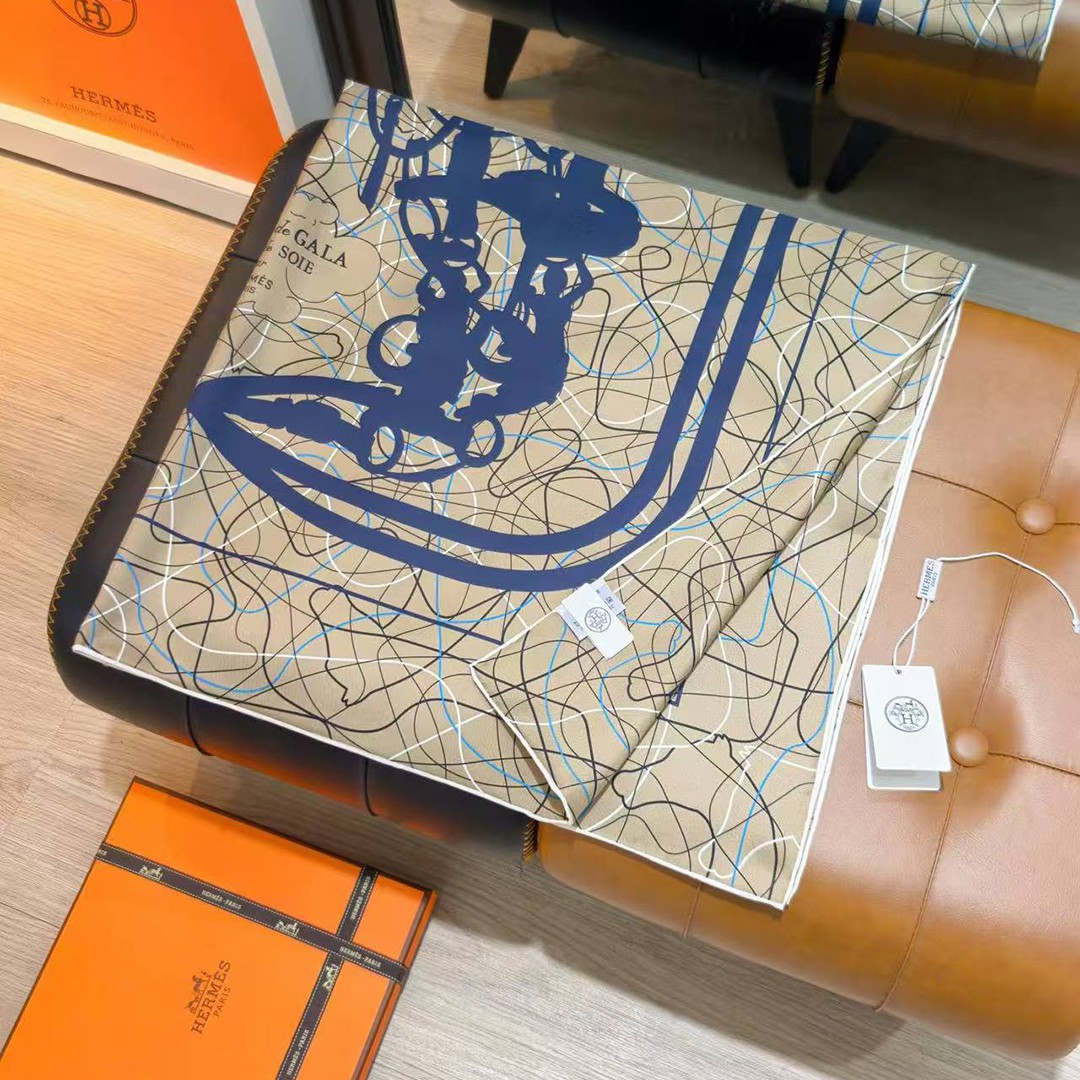
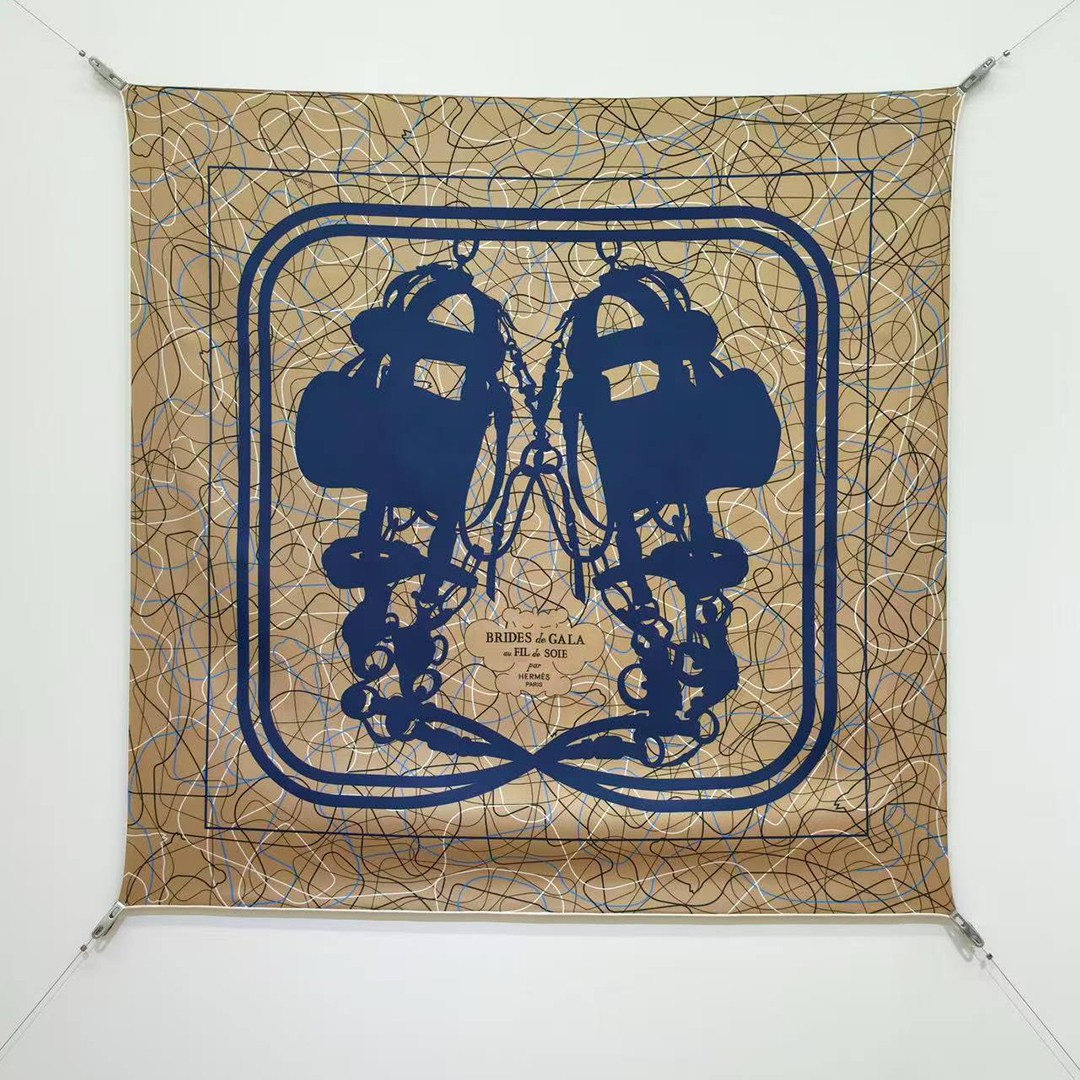
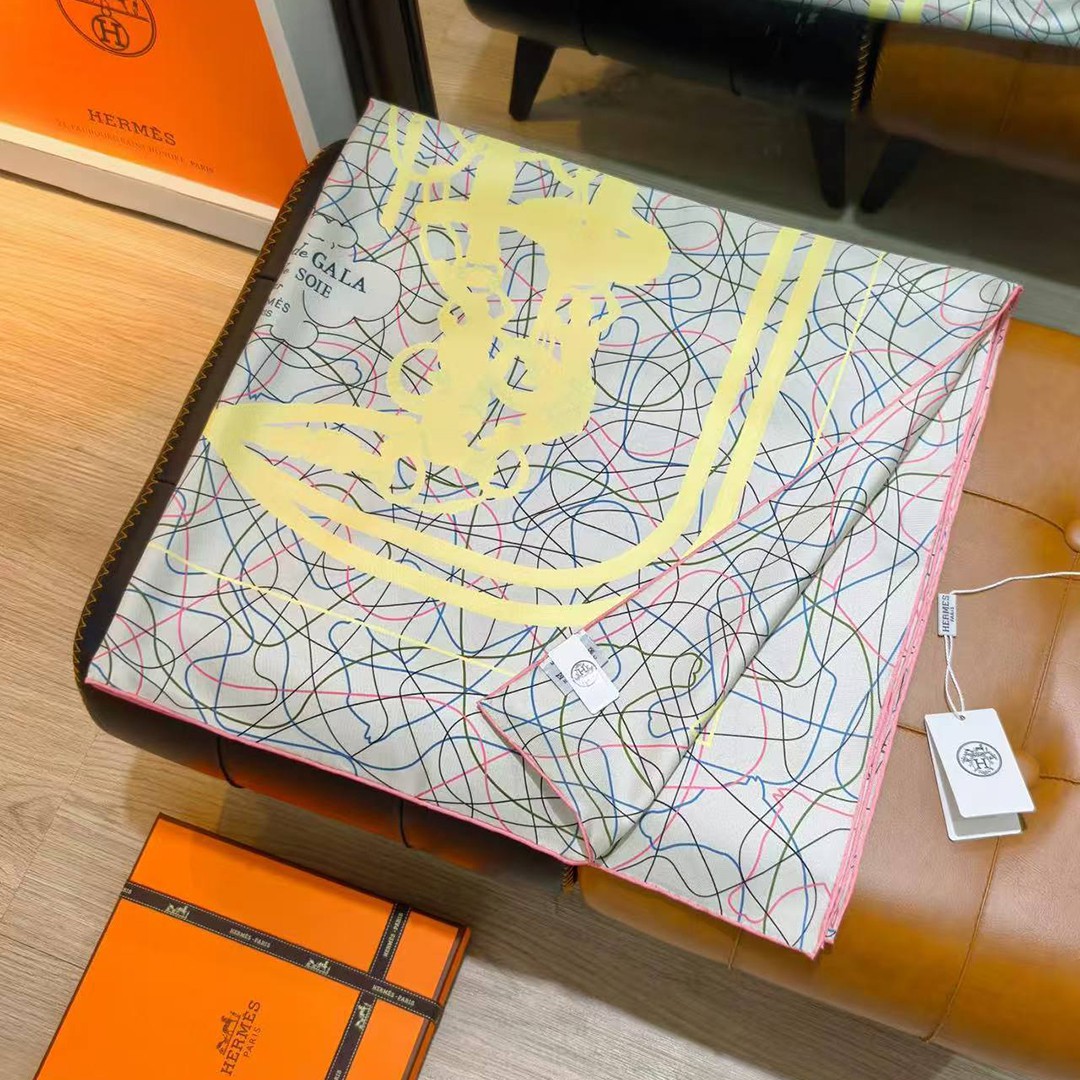
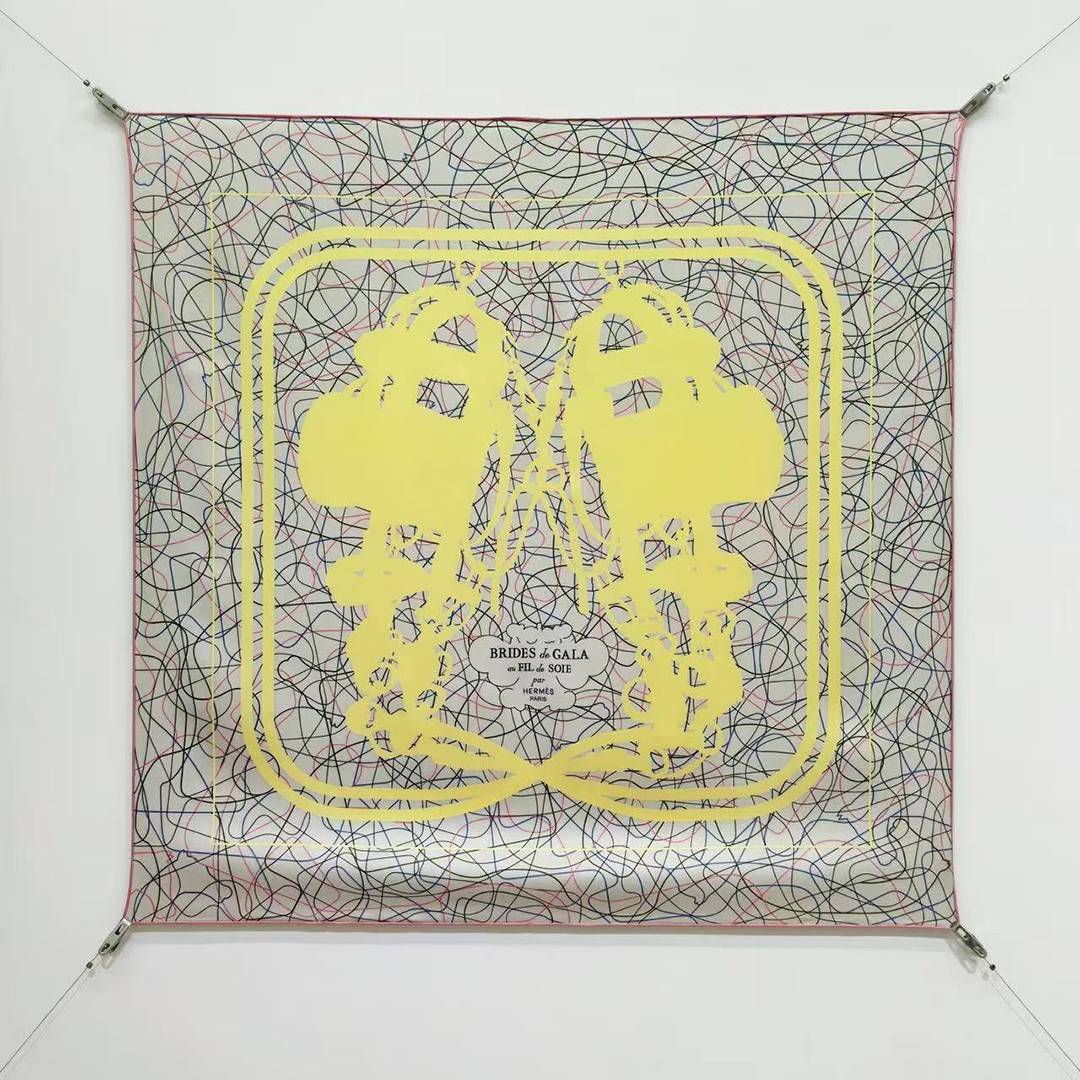
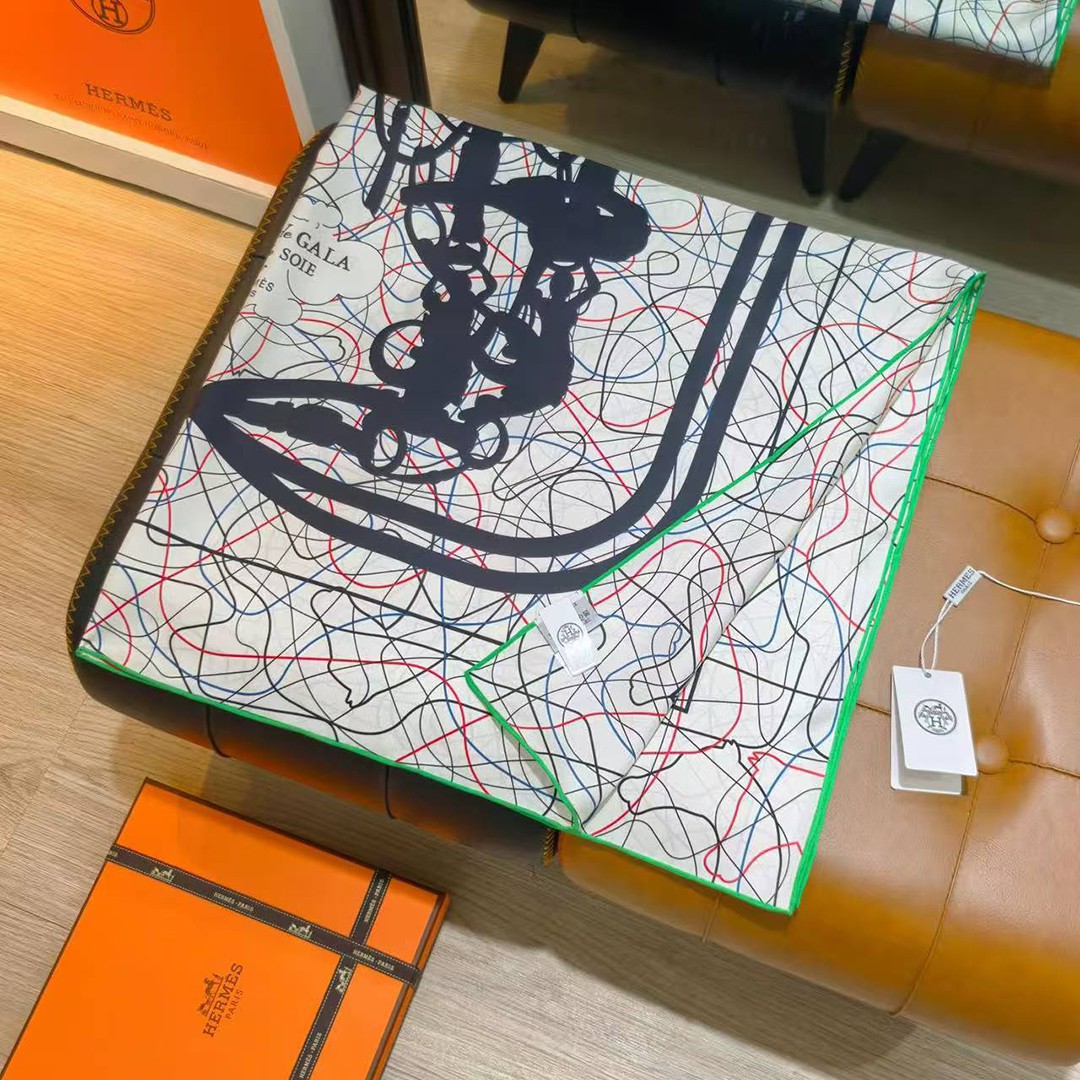
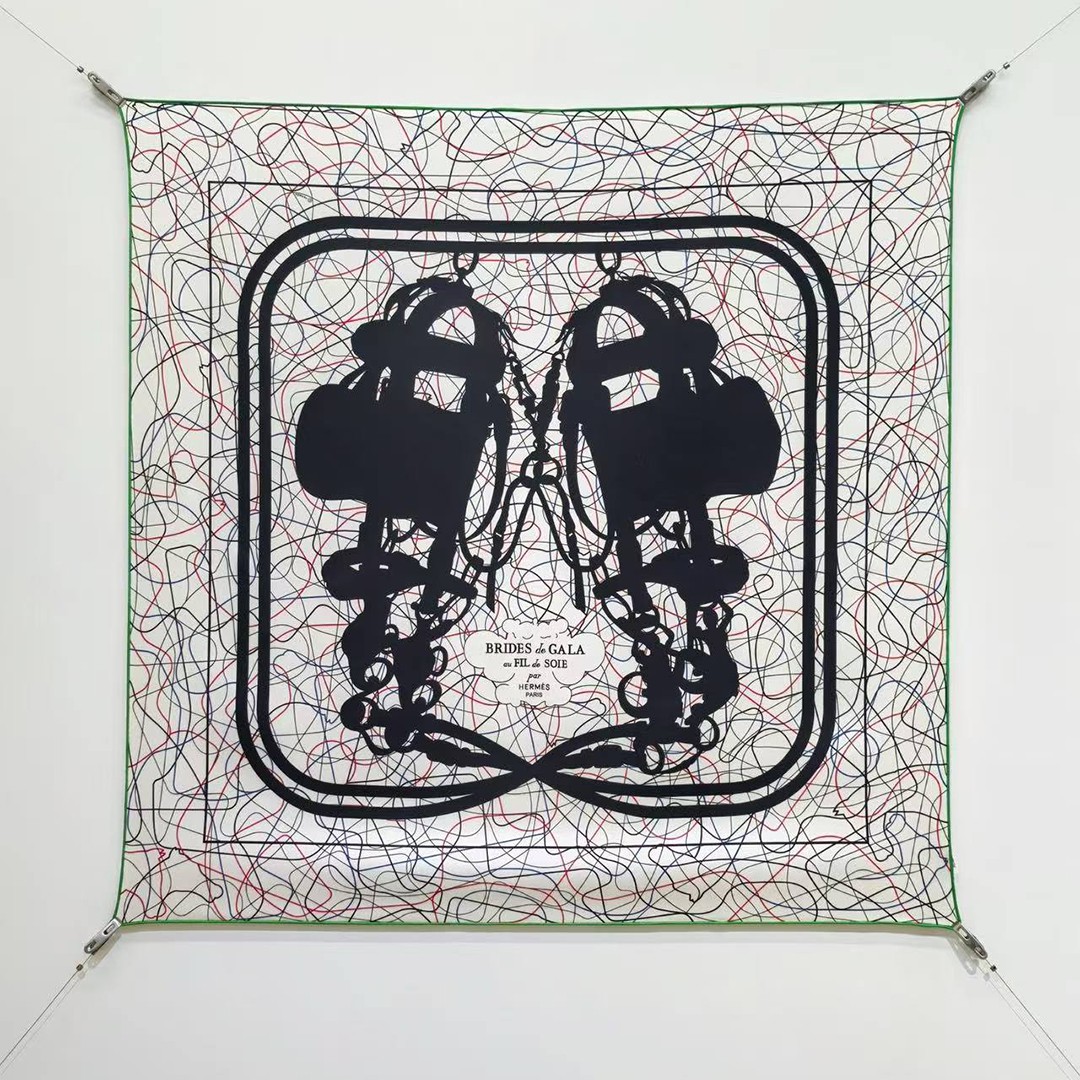
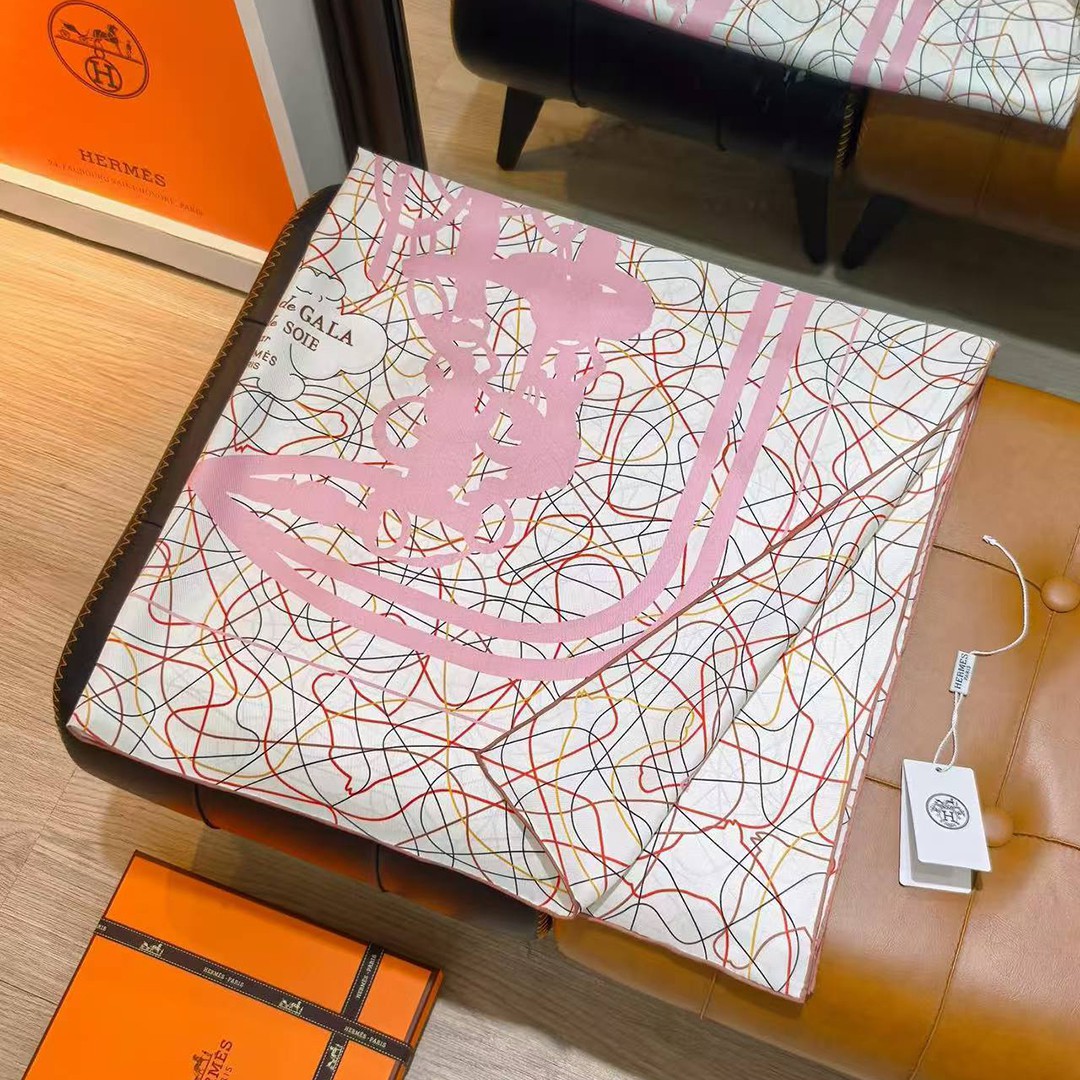
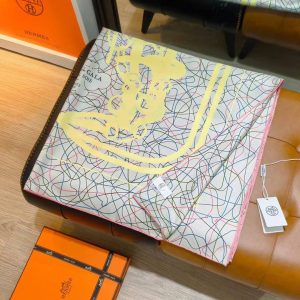
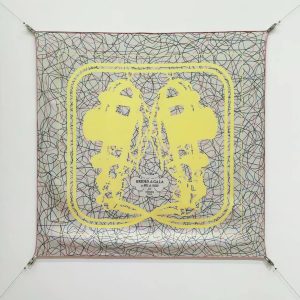
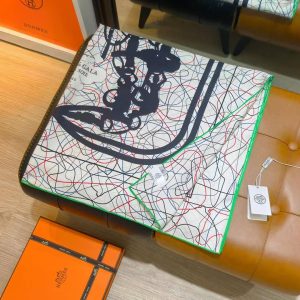
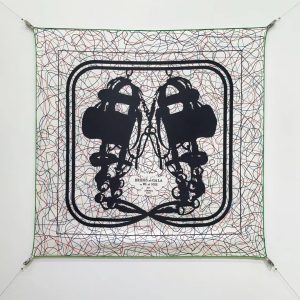
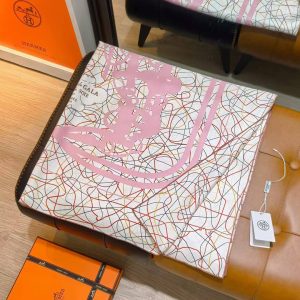
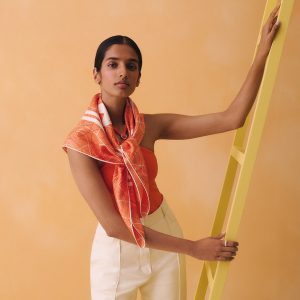
Hermes Brides de Gala au Fil de Soie Scarf 90 100% Silk H004310S 02
Original price was: $800.00.$99.00Current price is: $99.00.
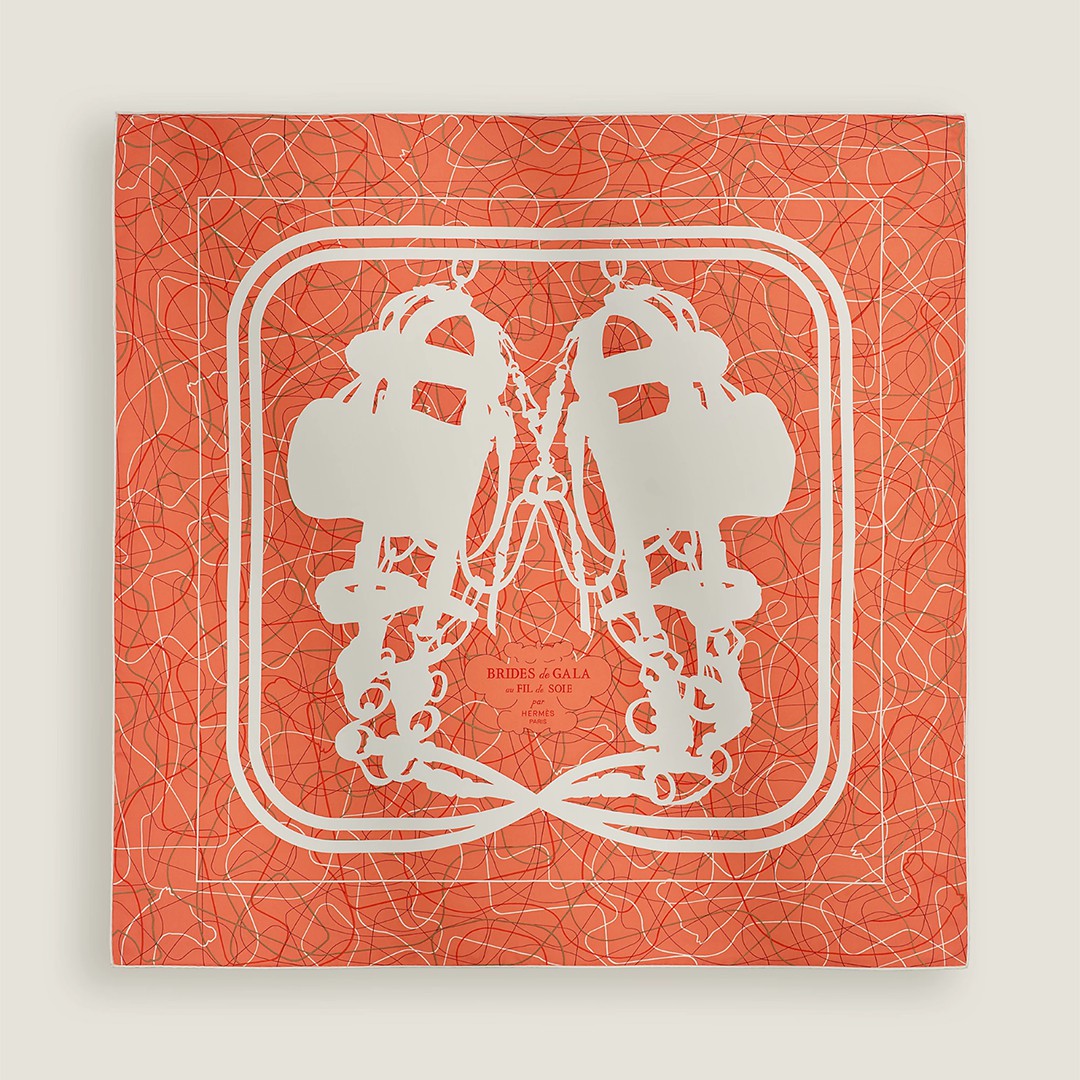
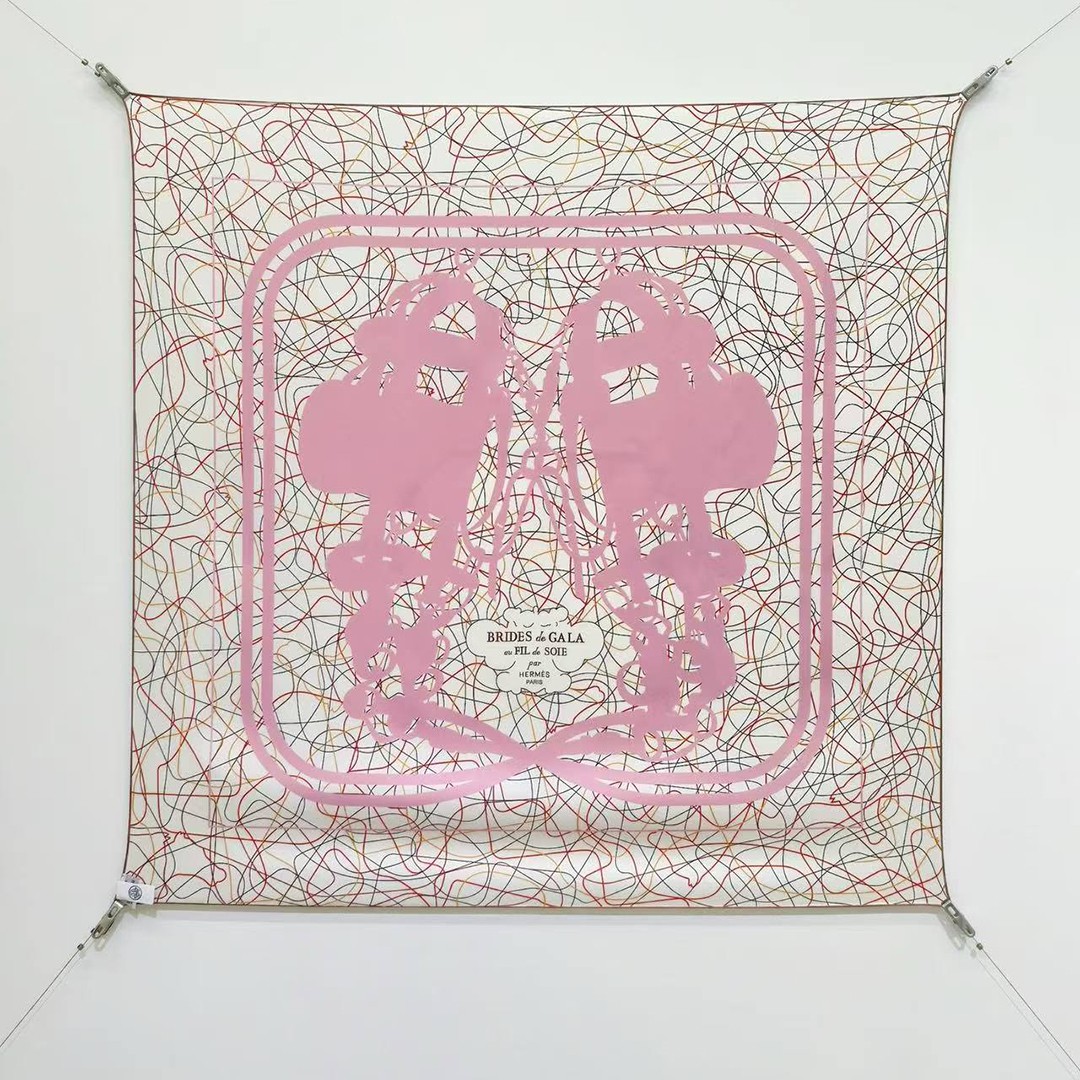
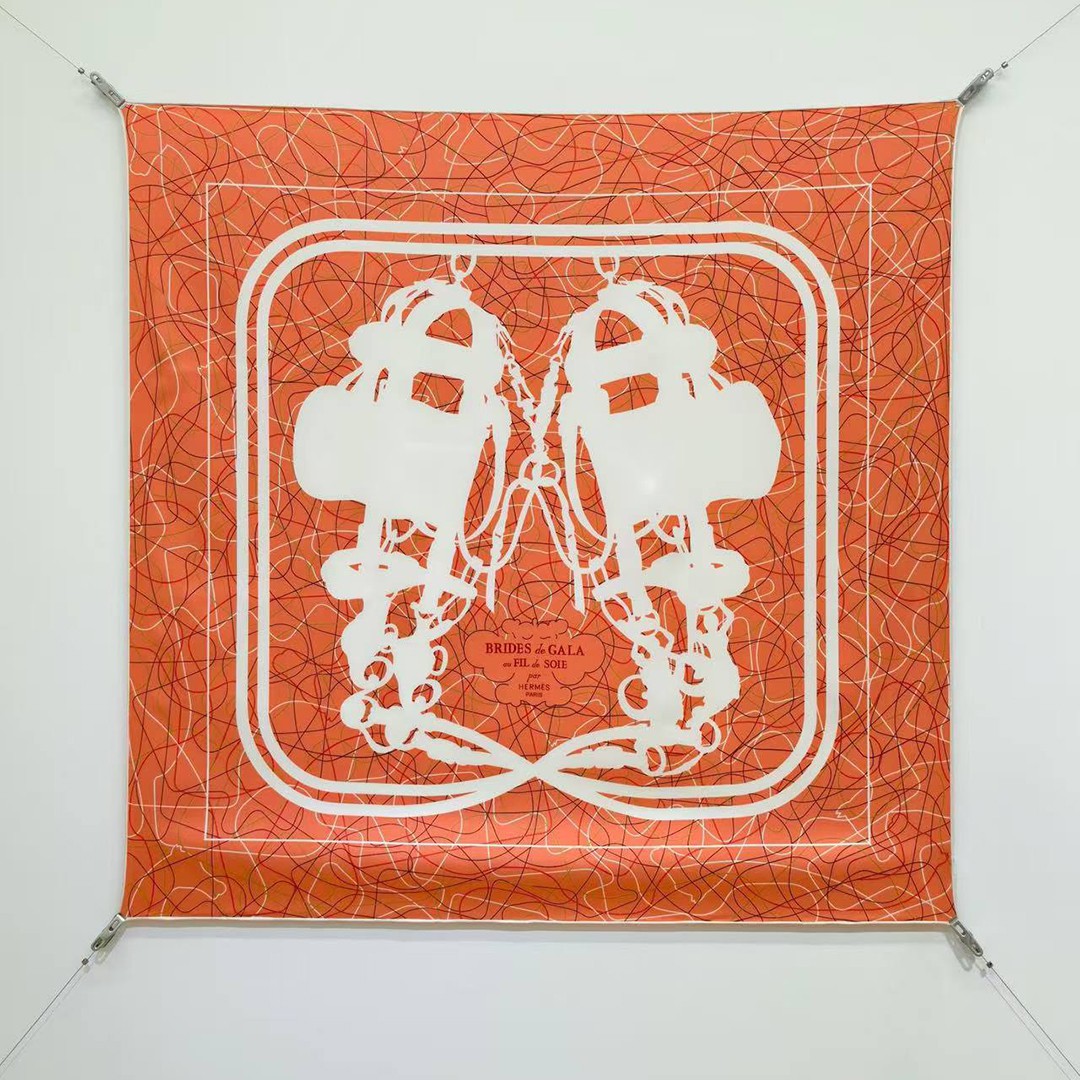
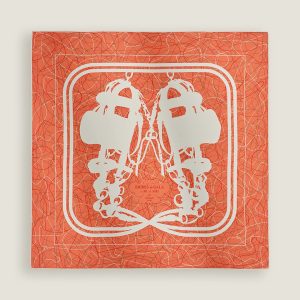
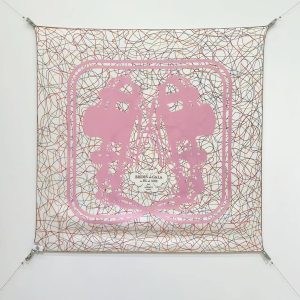
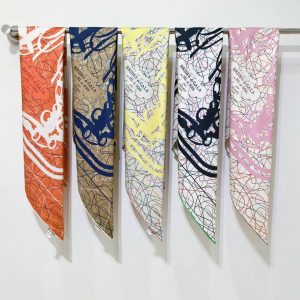
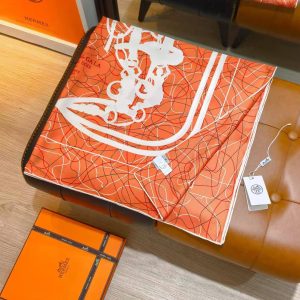
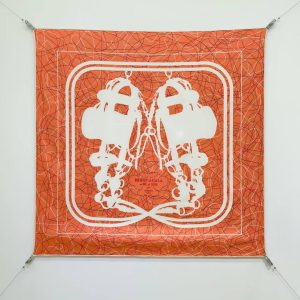
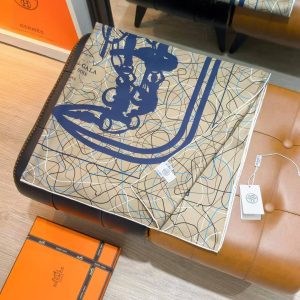
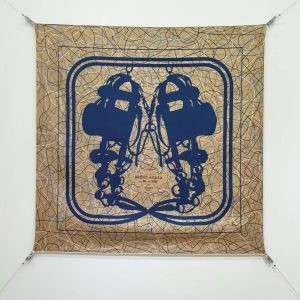
Brides de Gala au Fil de Soie scarf 90
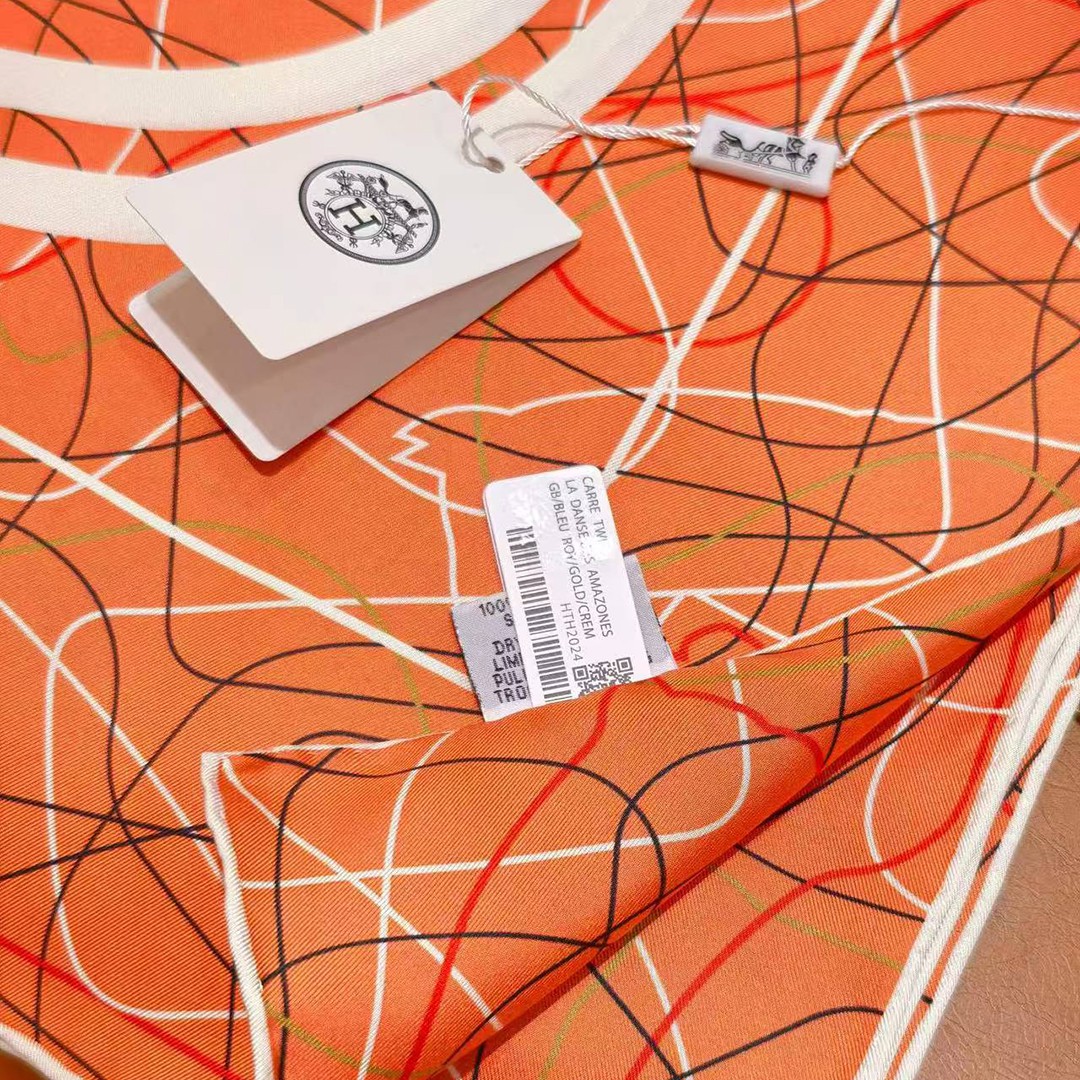
Scarf in silk twill with hand-rolled edges (100% silk).
Made in France
Designed by Florence Manlik and Hugo Grygkar
Dimensions: 34.8″ x 34.8″ | As this scarf is hand-rolled, the dimensions indicated may vary.
Product reference: H004310S 02
Bridles and reins are the oldest vocabulary this Paris workshop knows, and Brides de Gala has carried that vocabulary for decades without ever feeling like a costume. The au Fil de Soie version, drawn by Florence Manlik after Hugo Grygkar’s original composition, reworks the harness motifs so the straps read as silk thread rather than leather.
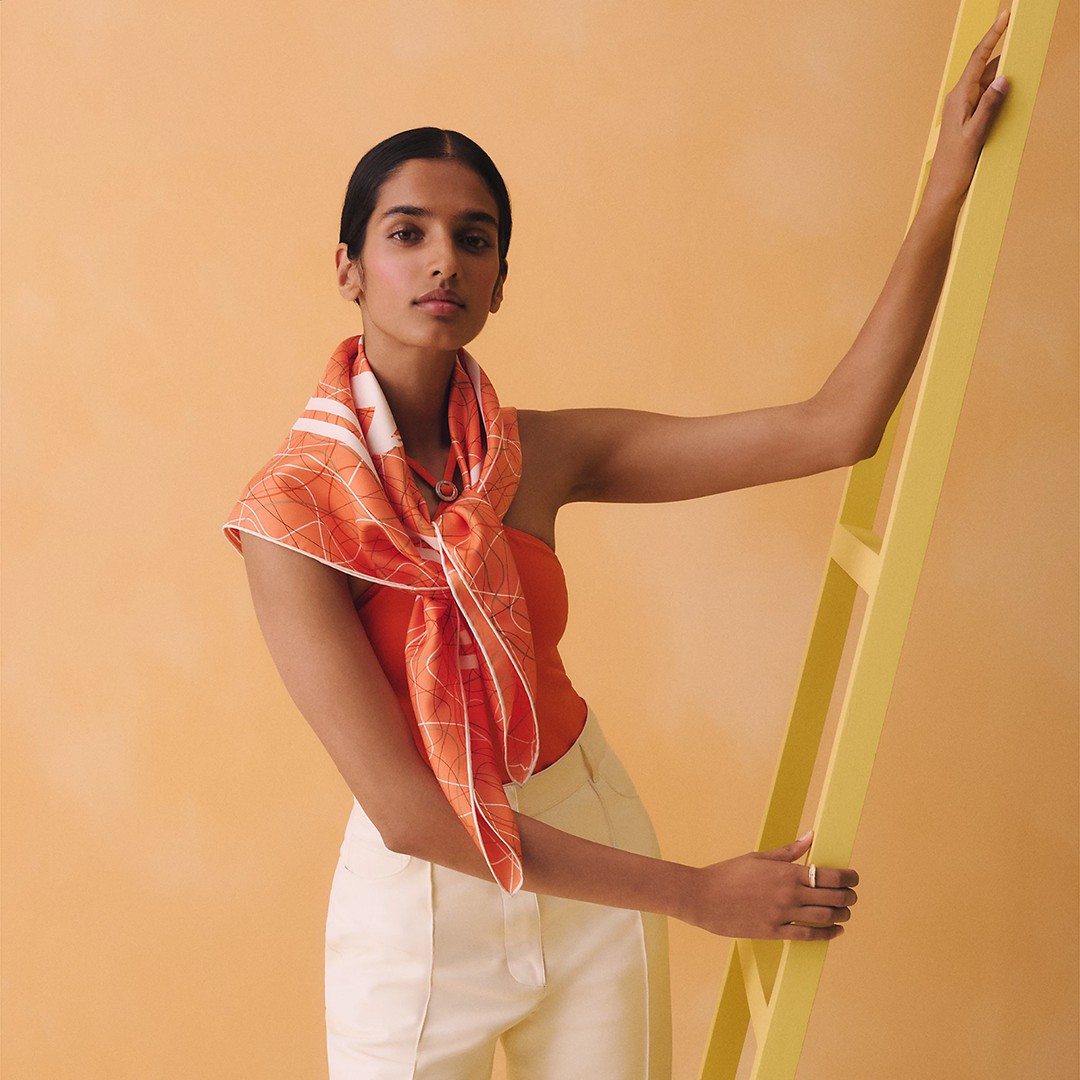
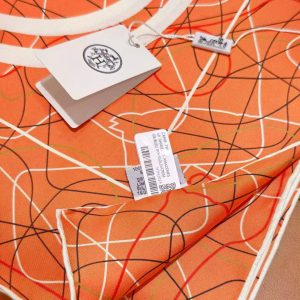
In the hand the square feels denser than its weight suggests. The silk twill has a faint grain you can feel under a thumb, and the print is sharp at the scale of a single stitch. I wear mine bias-folded over a navy blazer collar for meetings, and doubled at the throat with a raincoat on grey mornings. The hand-rolled border means the drawing runs right to the hem with no white margin, so the composition reads edge to edge when the square is open.
At 34.8 inches on each side it is the classic ninety square, printed and finished in France with edges rolled by hand. Because the hem is worked by hand, the four sides can differ slightly from each other; that is how you can tell a rolled edge from a machine-sewn one.
One honest note: an allover harness pattern is busy by nature. Against a striped shirt it turns into visual noise, so I keep everything around it plain and let the scarf do the talking. Silk twill also creases on a fold line, and a light steam in the bathroom after a shower is enough to bring it back. Flat, not hung, is how I keep it between wears.
Related products

Women
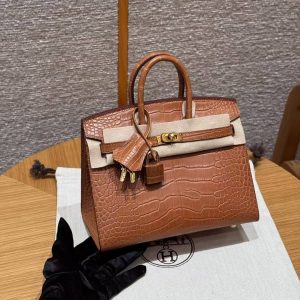
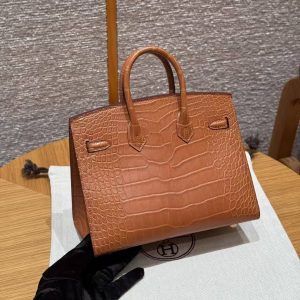
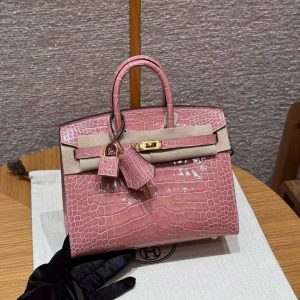
Hermes Birkin 20 Bag 1Q Rose Confetti Handmade In Bright American Alligator Leather Gold Hardware